Mammals · Felidae
Bobcats
Lynx rufus
Least Concern
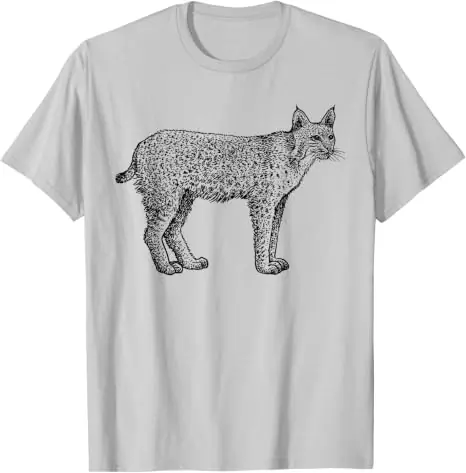
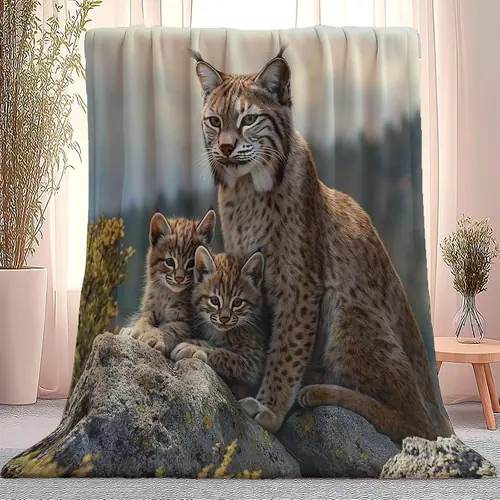
The Bobcat is an adaptable predator that inhabits wooded areas, semi-desert, urban edge, forest edges and swampland environments. It persists across much of its original range with healthy populations. With a gray-to-brown coat, whiskered face, and black-tufted ears, the Bobcat resembles the other species of the mid-sized Lynx genus.

Classification
Kingdom: Animalia
Phylum: Chordata
Class: Mammalia
Order: Carnivora
Family: Felidae
Genus: Lynx
Species: rufus
Other names: Bay Lynx, Catamount, Lynx Cat, Red Lynx, Wildcat
Size
About twice the size of the average house cat. 26 to 41 in. long with a short "bobbed" tail measuring 4 to 7 in. Weigh between 11 and 30 lbs.
Habitat
North America, from southern Canada to southern Mexico. Highly adaptable — forests, swamps, deserts, and suburban areas.
Description
Brown, buff, or brownish red with a white underside; dark brown or black stripes and spots on some parts of the body; short "bobbed", black-tipped tail.
Behavior
Create dens in hollow trees, thickets, or rocky crevices. Territorial, marking home ranges with urine, feces and anal gland secretions.
Diet
Rabbits, birds, mice, squirrels, and other small game.
Communication
Rarely vocal — yowling and hissing can be heard during mating season.
Gestation
50 to 70 days.
Birth
Litters of 1–6 kittens, around 9–9.5 oz. at birth, born with eyes closed (opening after ~10 days). Kittens remain with the mother for 9–12 months.
Sexually Mature
Around 1 year of age.
Life Span
Average 10–12 years; up to 30 in captivity. Kittens are preyed upon by fox, coyotes and owls.
Social Structure
Solitary animals.
Did You Know?
Bobcats can leap up to 10 feet.
Did You Know?
Bobcats have the greatest range of all native North American cats.
Bobcats in Foreign Languages
Catalanlinx roig
Cherokeeamelige gvhe
Finnishpunailves
Frenchlynx roux
GermanRotluchs
Hungarianvörös hiúz
Italianlince rossa
Navajonáshdóí libáhígíí
Portugueselince-vermelho
Russianrýzhaja rys'
Spanishlince rojo
Swedishrödlo