Mammals · Canids
Red Fox
Vulpes vulpes
Least Concern
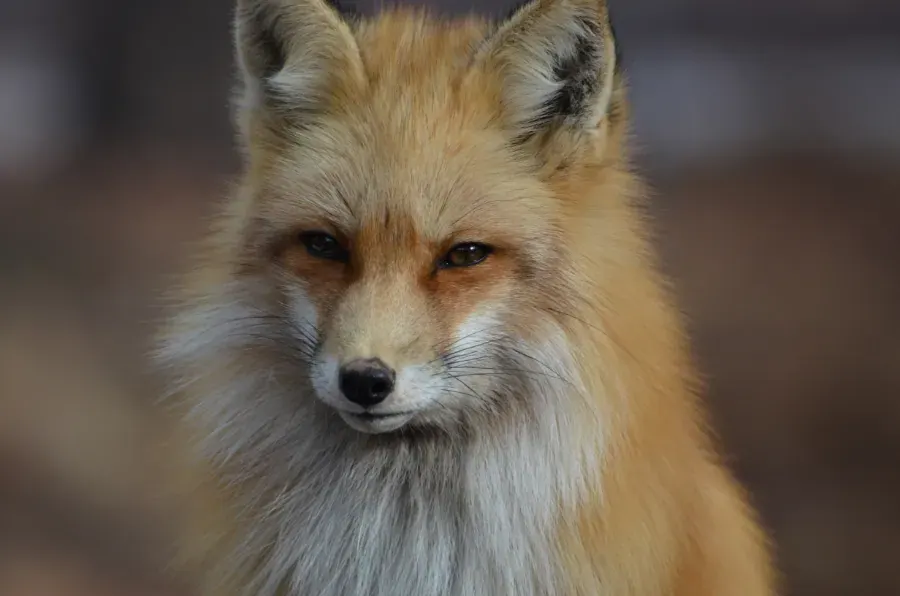
The red fox is the largest and most widely distributed of the true foxes, found across nearly the entire Northern Hemisphere and introduced to Australia. Small, quick and remarkably adaptable, it thrives everywhere from remote wilderness to city centers, relying on cunning and opportunism rather than pack cooperation or brute strength.
Classification
Kingdom: Animalia
Phylum: Chordata
Class: Mammalia
Order: Carnivora
Family: Canidae
Subfamily: Caninae
Tribe: Canini
Genus: Vulpes
Species: vulpes
Related genera: Vulpes includes 12 true fox species, incl. Arctic, kit & fennec fox
Size
14–20 in. body length, 12–22 in. tail. Larger than most people expect from photos — roughly the size of a small dog.
Weight
8–15 lbs, though a thick winter coat makes them appear noticeably heavier than they are.
Habitat
Extraordinarily broad — forests, grasslands, mountains, farmland, suburbs and city centers across Europe, Asia, North Africa and North America.
Description
A slender, orange-red coat, black legs and ears, and a long bushy tail with a white tip, though black and silver color variants occur naturally.
Diet
Omnivore and opportunist — rodents, rabbits, birds, insects, fruit and, in urban areas, discarded human food.
Hearing
Extremely acute; a fox can hear a rodent moving under a foot of snow and pinpoints prey by sound alone before pouncing.
The mousing pounce
A distinctive vertical leap used to break through snow or vegetation onto hidden prey below, guided by the Earth’s magnetic field according to recent research.
Communication
Around 40 distinct vocalizations, including a notorious high-pitched scream during the winter breeding season, plus scent marking and body posture.
Gestation
About 52–53 days.
Birth & Litter Size
A litter of 4–6 kits (occasionally more), born blind and dark-furred in an underground den; coats lighten to red over several weeks.
Sexually Mature
About 10 months.
Life Span
3–4 years in the wild (much shorter than commonly assumed, due to high early mortality), up to 12–15 in captivity.
Did You Know?
Research suggests red foxes may sense Earth's magnetic field and use it like a targeting reticle to judge distance before their signature pouncing leap onto hidden prey.
Did You Know?
A red fox's eyes have vertical, slit-shaped pupils similar to a cat's — an adaptation for precise depth perception during low-light hunting, unlike the round pupils of most other canids.
Did You Know?
The Soviet-era "domesticated silver fox" breeding experiment, running continuously since 1959, has produced foxes that wag their tails, seek human affection and even develop floppy ears and piebald coats after only a few dozen generations of selecting purely for tameness.
Fox in Foreign Languages
Frenchrenard
GermanFuchs
Italianvolpe
Portugueseraposa
Spanishzorro
Russianlisá
Polishlis
Swahilimbweha
Arabicthaalab
Hindilomdi
Japanesekitsune
Mandarinhúli
Koreanyeou
Greekalepoú
Turkishtilki
Dutchvos
Swedishräv
Irishsionnach
Welshcadno
Finnishkettu


