Reptiles · Crocodylia
American Alligator
Alligator mississippiensis
Least Concern
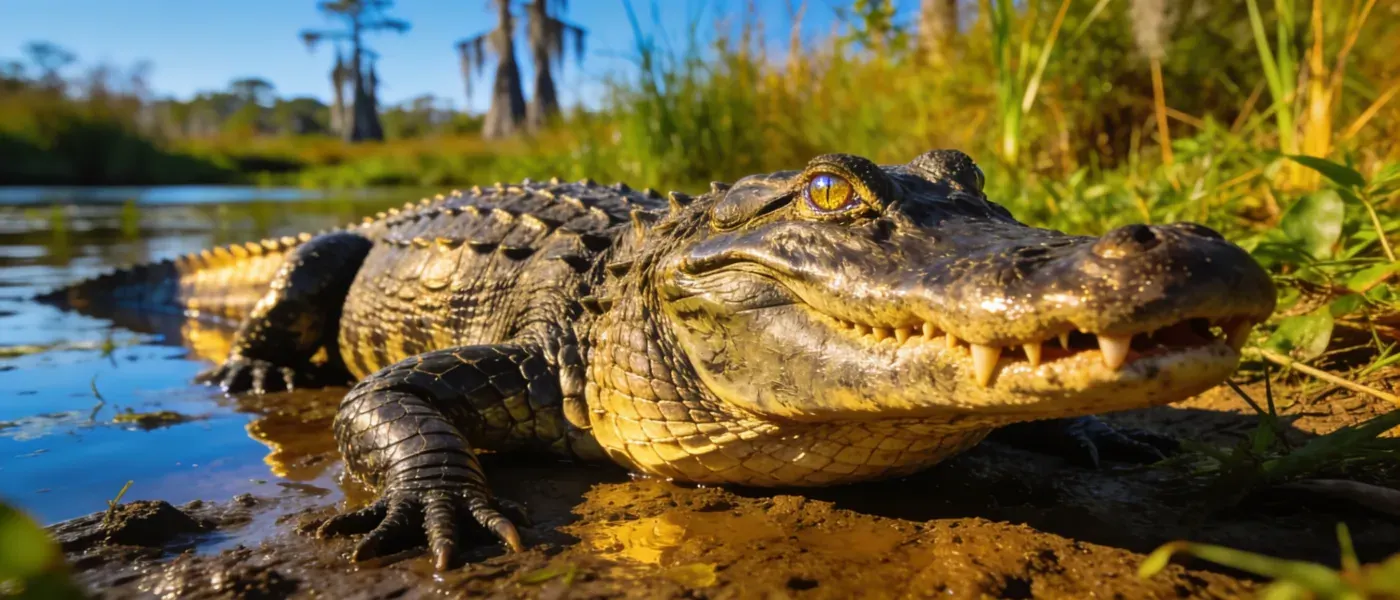
The American alligator is a large reptile native to the southeastern United States, distinguished from crocodiles by its broader, U-shaped snout and darker coloring.
Classification
Kingdom: Animalia
Phylum: Chordata
Class: Reptilia
Order: Crocodylia
Family: Alligatoridae
Genus: Alligator
Species: mississippiensis
Related species: Chinese alligator, caimans, crocodiles — order Crocodylia
Length
Up to 15 feet.
Weight
Up to 1,000 lbs for large males.
Habitat
Freshwater swamps, marshes, and rivers.
Description
Dark, almost black scaled skin and a broad, U-shaped snout.
Diet
Carnivore — fish, birds, and mammals.
Ecosystem Role
A keystone species — digs "alligator holes" that hold water during droughts and support other wildlife.
Habitat Range
Restricted almost entirely to the southeastern United States.
Nesting
Females build large mound nests of vegetation and guard them closely.
Clutch Size
Typically 30–50 eggs, incubated for about 65 days.
Sexually Mature
Around 10–12 years of age.
Life Span
35–50 years in the wild.
Did You Know?
American alligators were once hunted to near-extinction but fully recovered after federal protection in the 1970s.
Did You Know?
Unlike crocodiles, alligators have a wide, rounded U-shaped snout.
Did You Know?
The deep depressions alligators dig, called "alligator holes," hold water during droughts and support many other wetland species.
Alligator Species
American Alligator
Alligator mississippiensis — southeastern U.S.
Chinese Alligator
Alligator sinensis — Critically Endangered, eastern China
Alligator in Foreign Languages
Frenchalligator
GermanAlligator
Italianalligatore
Portuguesejacaré
Spanishcaimán
Russianalligator
Polishaligator
Japanesearigetā
Mandarinèyú
Koreanaelligeoteo
Dutchalligator
Swedishalligator
Norwegianalligator
Finnishalligaattori