A Salamander Stuck in Its Larval Form
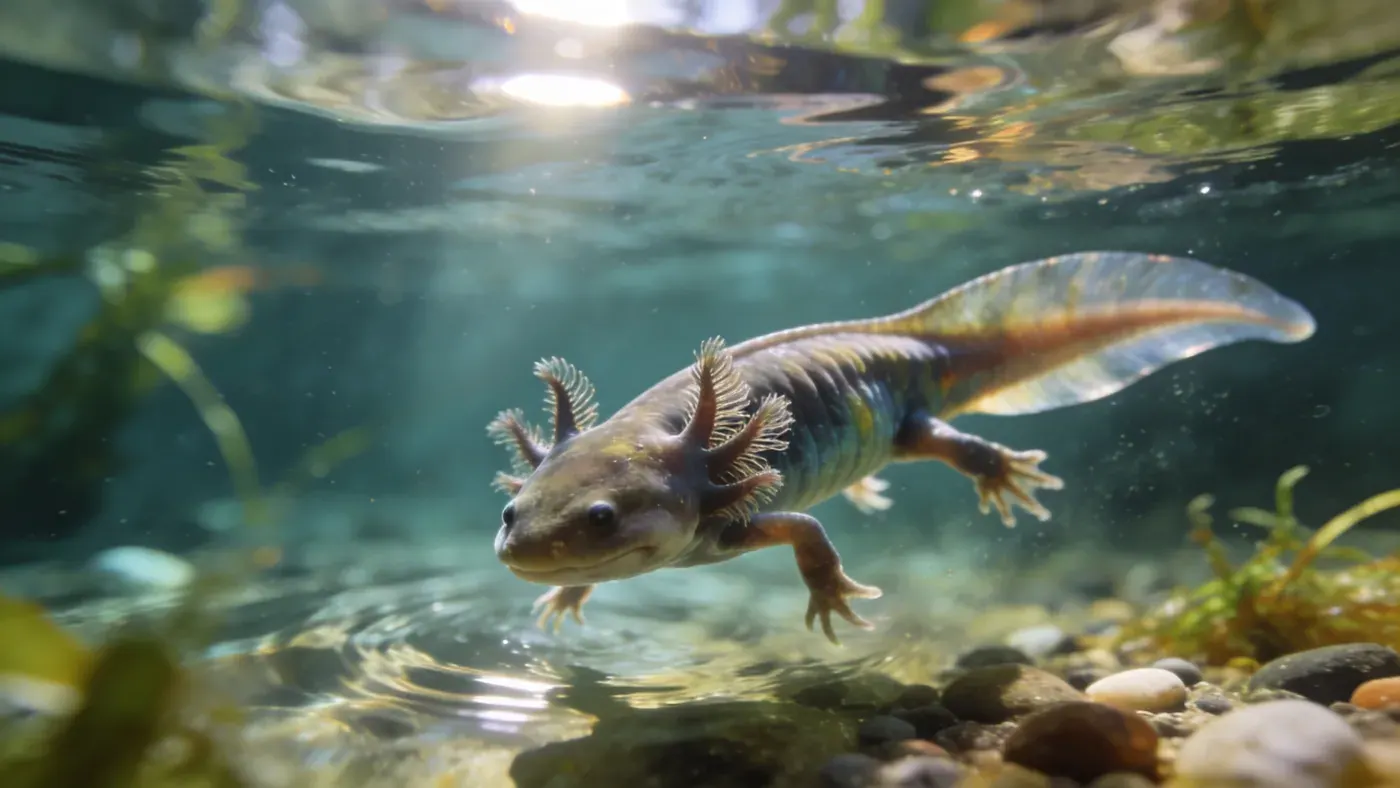
Most salamanders undergo metamorphosis, losing their gills and moving onto land as adults. Axolotls, however, exhibit neoteny — they reach full sexual maturity while still in their aquatic, larval form.
Staying in the Water for Life
Under normal conditions, axolotls never leave the water or lose their external gills, spending their entire lives in an aquatic state that most other salamander species only pass through briefly.
A Missing Hormone Signal
Metamorphosis in salamanders is triggered by a surge in thyroid hormone. Axolotls have a genetic quirk that blunts their tissues' response to that signal, so even though they can produce the hormone, their bodies largely ignore the cue to transform.
Metamorphosis Can Still Be Triggered
In rare cases, or in lab settings using an iodine-based hormone treatment, axolotls can be induced to metamorphose into a land-dwelling adult — but the process is stressful and often shortens their lifespan, so it happens only naturally under unusual environmental pressure.