Found Only on a Few Indonesian Islands
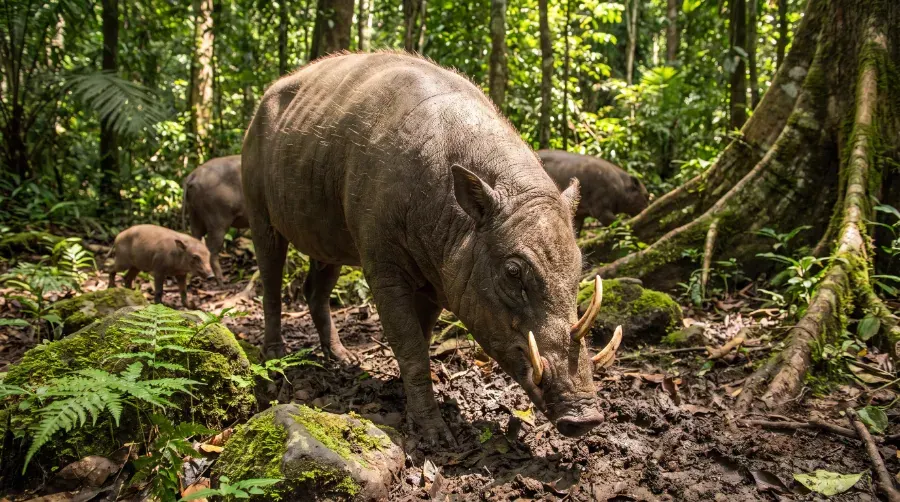
Babirusa are found only on Sulawesi and a handful of nearby Indonesian islands, an extremely limited range that makes the species especially vulnerable. Several of the four recognized babirusa species are classified as Vulnerable or Endangered by the IUCN, with wild populations continuing to decline.
Hunting Pressure
Babirusa have long been hunted for their meat by local communities, and this pressure has intensified as roads and logging have opened up previously remote forest areas. Because babirusa reproduce slowly, typically giving birth to only one or two piglets per litter, populations struggle to recover from sustained hunting.
Habitat Loss from Logging and Agriculture
Deforestation for timber, palm oil, and agriculture has steadily reduced the rainforest habitat babirusa depend on. As forest cover shrinks, remaining babirusa populations become more fragmented and isolated, increasing the risk of local extinctions.
Conservation Efforts Underway
Protected areas such as Nantu Wildlife Reserve on Sulawesi have become important strongholds for wild babirusa populations, and a number of zoos worldwide participate in coordinated breeding programs intended to maintain a genetically healthy captive population as a safeguard for the species.