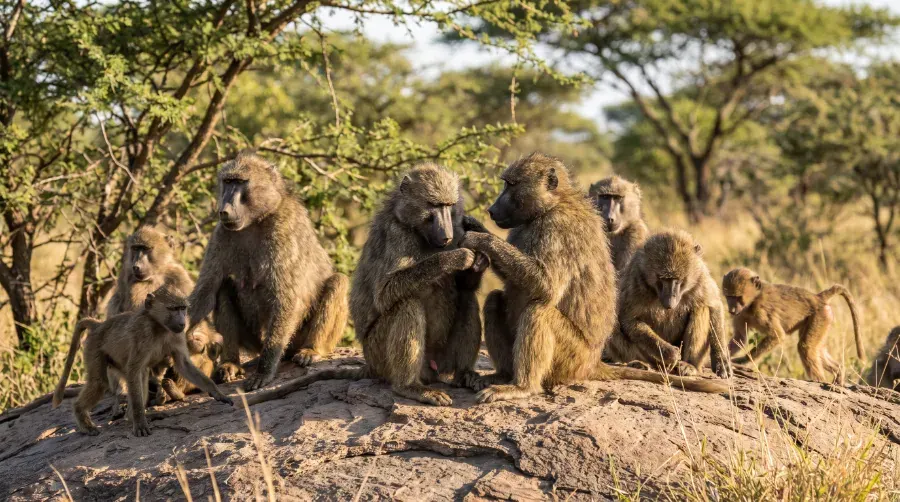
A Multi-Tiered Society
A baboon troop of 50 to 150 individuals is organized around overlapping layers of relationships — matrilines of related females, shifting male dominance hierarchies, and cross-cutting friendships and alliances — making baboon social structure one of the most intricate of any non-ape primate.
Rank Runs Through the Female Line
Female baboons inherit their social rank directly from their mothers and typically settle in just below her in the hierarchy — a stable system that persists across generations, in contrast to the more volatile, contest-based rank of adult males.
Male Coalitions and Turnover
Males leave their birth troop at maturity and must fight or form alliances to establish rank in a new group. Male dominance is far less stable than female rank, often shifting within months as new challengers arrive or alliances break down.
Grooming Builds Alliances
Baboons groom each other for hours daily, an activity that reduces stress hormones and cements social bonds that can determine access to food, mates, and protection — researchers have found that baboons with stronger social bonds tend to live longer.