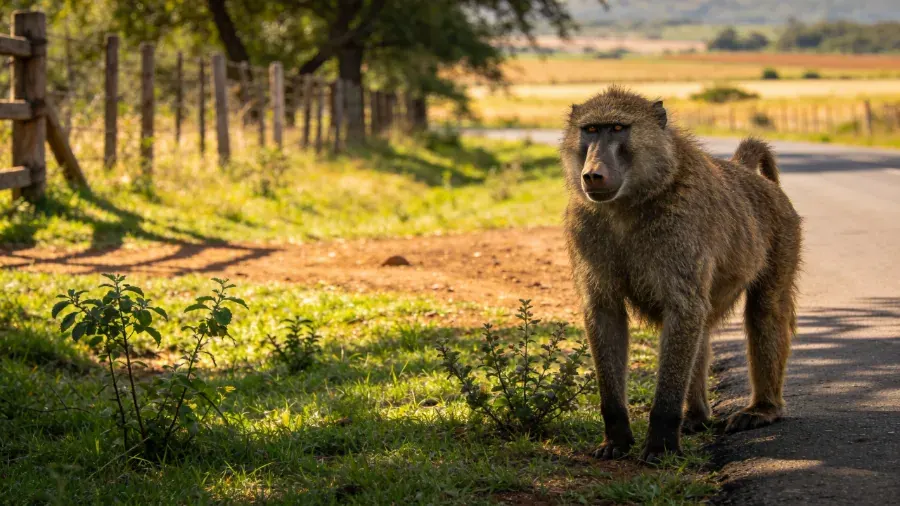
A Species That Thrives Near People
Unlike many primates whose populations are shrinking with habitat loss, most baboon species are classified as Least Concern, and some have expanded their range by exploiting farmland, garbage and towns bordering their historic habitat.
Crop Raiding and Conflict
Baboon troops readily raid maize, fruit orchards and vegetable gardens near their range, sometimes causing significant losses for subsistence farmers. This conflict has made baboons one of the primates most frequently killed or trapped as agricultural pests across parts of Africa.
Urban and Tourist Encounters
In places like Cape Town, South Africa, baboon troops regularly enter residential areas in search of food, prompting "baboon monitor" programs that use noise deterrents and coordinated tracking to herd troops away from homes without resorting to lethal control.
Toward Coexistence
Conservationists increasingly focus on non-lethal deterrents — secure fencing, wildlife corridors, and community education — to reduce conflict rather than culling, recognizing baboons' ecological role as seed dispersers and prey for large carnivores.