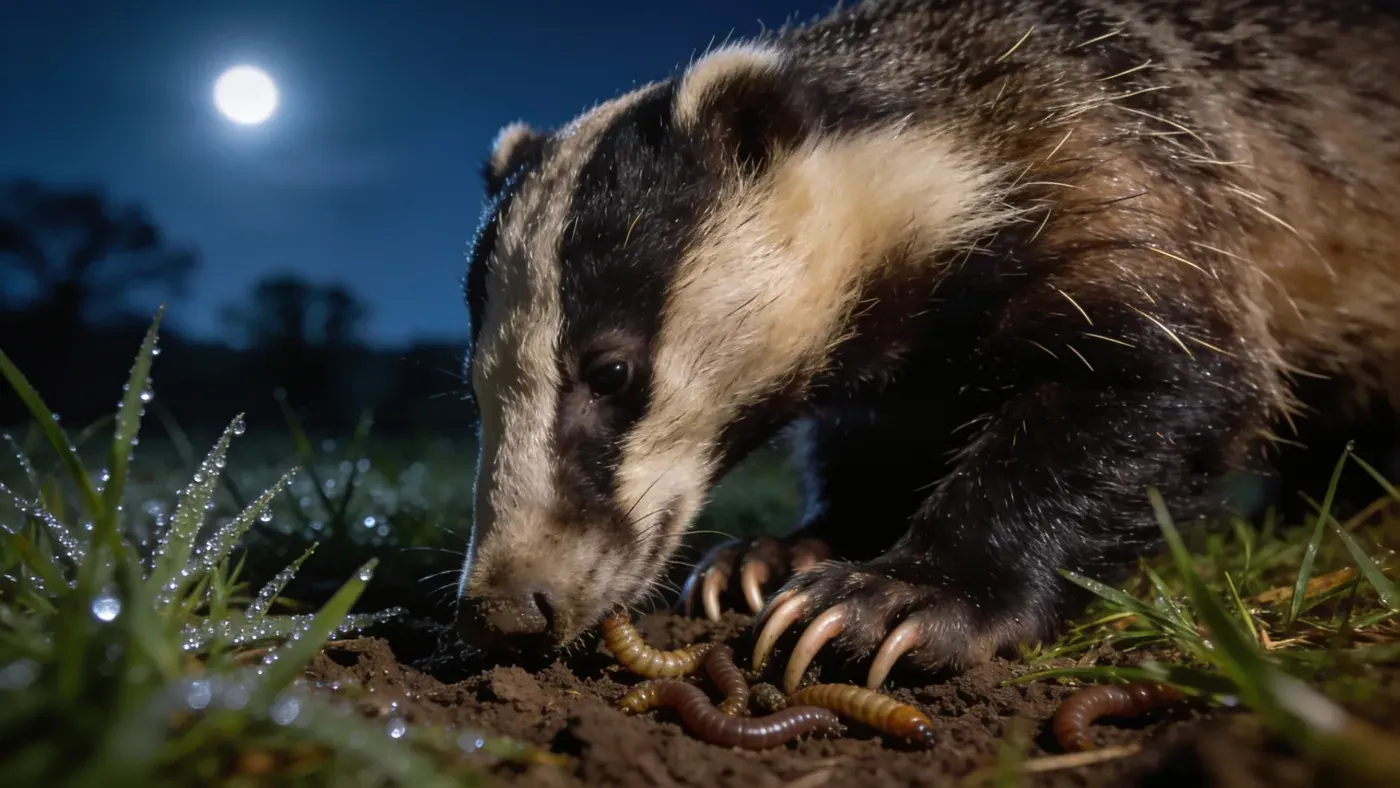
Earthworms Come First
Badgers are opportunistic omnivores, but across much of their European range earthworms make up the single biggest part of their diet, sometimes hundreds eaten in one night of foraging. A badger locates worms by smell and sound, snuffling along the ground before pinning one with a paw and hoovering it up — a technique so central to badger foraging that worm-rich, well-drained pasture is one of the best predictors of where a sett will be found.
A Flexible, Opportunistic Menu
Beyond earthworms, badgers eat insects, slugs, snails, small mammals such as voles and young rabbits, birds' eggs, and carrion. Plant matter rounds out the diet — fruit, nuts, roots, and bulbs — and badgers will readily raid cultivated cereal fields or orchards when the season makes crops an easier meal than foraging in open ground.
Seasonal Shifts
Diet shifts noticeably through the year: earthworms are easiest to find in damp spring and autumn soil, while dry summer conditions push badgers toward insects, fruit, and whatever small prey they can catch. In autumn, badgers eat heavily to build the fat reserves that will carry them through the leaner winter months, when food is scarcer and activity drops off substantially.
Foraging Behavior
Badgers typically emerge from the sett at dusk and forage largely alone, even though clan members share the same burrow, covering a route that can stretch over a mile in a single night. They memorize productive foraging areas within their territory and revisit them regularly, adjusting their route based on where food has recently been most plentiful.