Mammals · Chiropterans
Bat
Order Chiroptera (1,400+ species)
Many species threatened
Bats are the only mammals capable of true, sustained flight, with over 1,400 species making up nearly a quarter of all mammal species on Earth. Found on every continent except Antarctica, they range from the world’s smallest mammal to fruit bats with 6-foot wingspans, and provide essential pollination, seed dispersal and insect control worldwide.
Classification
Kingdom: Animalia
Phylum: Chordata
Class: Mammalia
Order: Chiroptera
Suborders: Yinpterochiroptera, Yangochiroptera
Living species: Over 1,400 — roughly a fifth of all mammal species
Nearest relatives: Debated; genetic evidence links bats to a group including carnivores and pangolins rather than to primates
Size
Bumblebee bat: under 1.5 in., the smallest mammal on Earth. Giant golden-crowned flying fox: up to 6 ft wingspan, the largest bat.
Habitat
Every continent except Antarctica — caves, forests, deserts, cities and everywhere between, adapted to nearly every climate.
Description
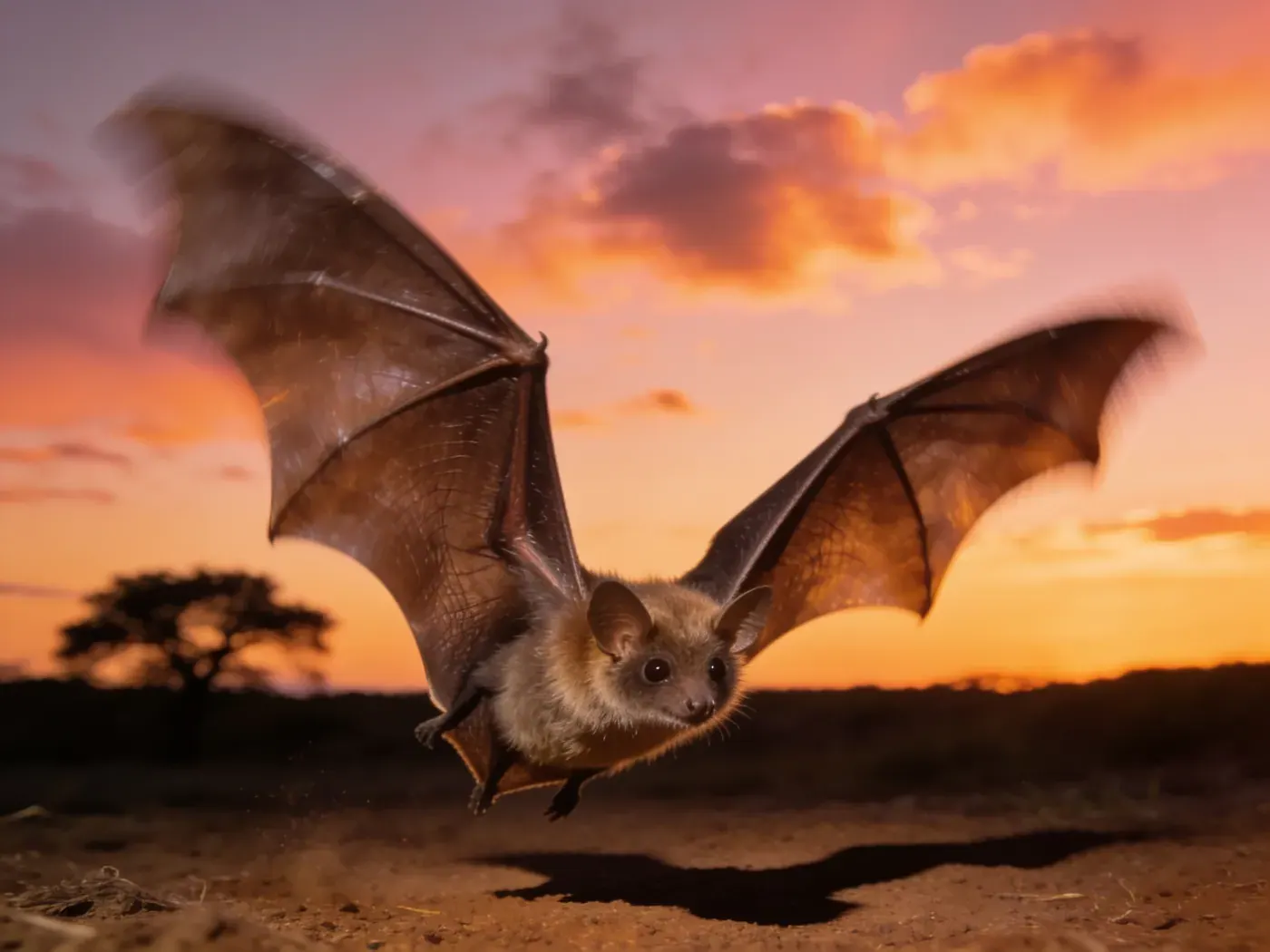
A modified forelimb forms the wing, with a thin membrane stretched between elongated finger bones — the origin of the order name Chiroptera, "hand-wing."
Diet
Varies enormously by species — insects (most species), fruit and nectar, small vertebrates, and, in three vampire bat species, blood.
Echolocation
Most bats navigate and hunt using echolocation — emitting high-frequency calls and interpreting the returning echoes with extraordinary precision, some detecting objects thinner than a human hair.
Flight
The only mammal capable of true, sustained, powered flight — as opposed to the gliding flying squirrels and sugar gliders achieve.
Torpor & hibernation
Many species enter torpor daily to conserve energy, and temperate-zone bats hibernate through winter, some for over six months.
Communication
Echolocation calls, plus a wide range of social vocalizations — some species’ songs rival birds in complexity.
Gestation
40 days to 6 months depending on species.
Birth & Litter Size
Usually a single pup (rarely 2–4), among the slowest reproductive rates relative to size of any mammal group.
Sexually Mature
6 months to 2 years depending on species.
Life Span
Remarkably long for their size — many small bats live 20–30 years, far exceeding similarly sized mammals like mice or shrews.
Did You Know?
Bats make up roughly a fifth of all mammal species on Earth — more than 1,400 species, second only to rodents in overall diversity.
Did You Know?
A single little brown bat can catch and eat up to 1,000 mosquito-sized insects in just one hour of foraging.
Did You Know?
Contrary to the old expression, bats are not blind — most species see perfectly well, and some fruit bats have excellent low-light vision. Echolocation supplements rather than replaces sight.
Bat in Foreign Languages
Frenchchauve-souris
GermanFledermaus
Italianpipistrello
Portuguesemorcego
Spanishmurcielago
Russianletuchaya mysh
Polishnietoperz
Swahilipopo
Arabickhuffash
Hindichamgadad
Japanesekomori
Mandarinbianfu
Koreanbakjwi
Greeknyxterida
Turkishyarasa
Dutchvleermuis
Swedishflaggermus
Nahuatltzinacan
Maoripekapeka
Zuluilulwane