Seeing With Sound
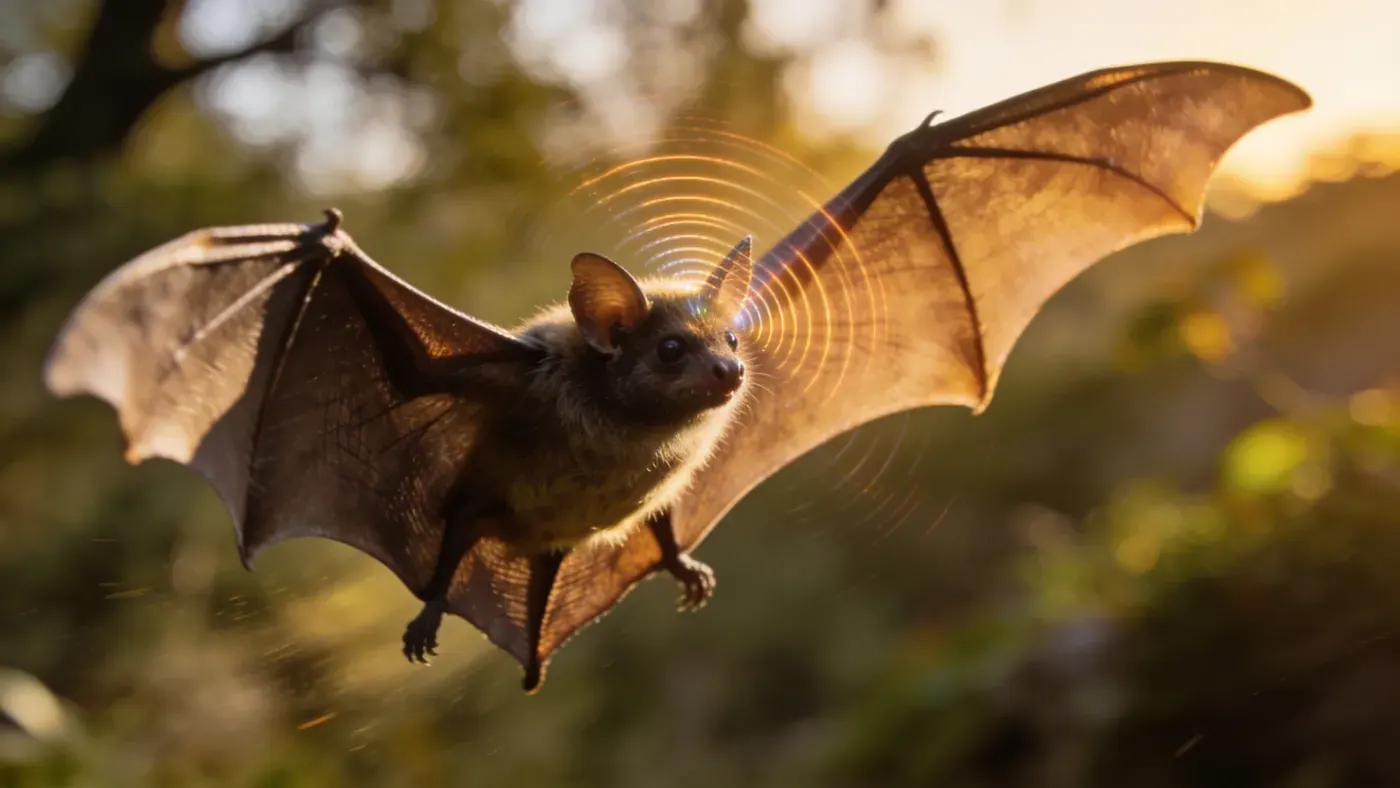
Most bat species navigate and hunt using echolocation: they emit high-frequency calls, mostly well above the range of human hearing, and interpret the timing, pitch and intensity of the returning echoes to build a detailed picture of their surroundings — effectively "seeing" through sound in complete darkness.
Extraordinary Precision
Some bat species can detect objects as thin as a human hair using echolocation alone, and distinguish between prey items and background clutter like leaves or branches with remarkable accuracy — a level of acoustic resolution that has made bat echolocation a subject of study for engineers developing sonar and obstacle-detection technology.
Calls Tuned to the Task
Different bat species use different call frequencies and patterns suited to their hunting style — some emit long, low-frequency calls suited to open spaces, while others use rapid, high-frequency bursts for navigating cluttered forest understory, adjusting call rate and pitch in real time as they close in on prey.
Not Every Bat Uses It
Most fruit bats (family Pteropodidae), including the large flying foxes, rely primarily on excellent eyesight and a strong sense of smell rather than echolocation, navigating largely by sight in the way most other mammals do — one of the clearer divisions within the bat order between echolocating and non-echolocating lineages.
Avoiding Self-Interference
A hunting bat can emit and process echo signals dozens of times per second as it closes in on prey, and must avoid deafening itself with its own loud calls — achieved through specialized middle-ear muscles that briefly dampen hearing sensitivity at the exact instant each call is emitted, then restore it in time to catch the echo.