Only Three Species, Out of 1,400
Of the more than 1,400 bat species worldwide, only three feed on blood: the common vampire bat, the hairy-legged vampire bat, and the white-winged vampire bat, all native to Latin America — a tiny, specialized minority within an otherwise enormously varied order.
A Precise, Non-Lethal Bite
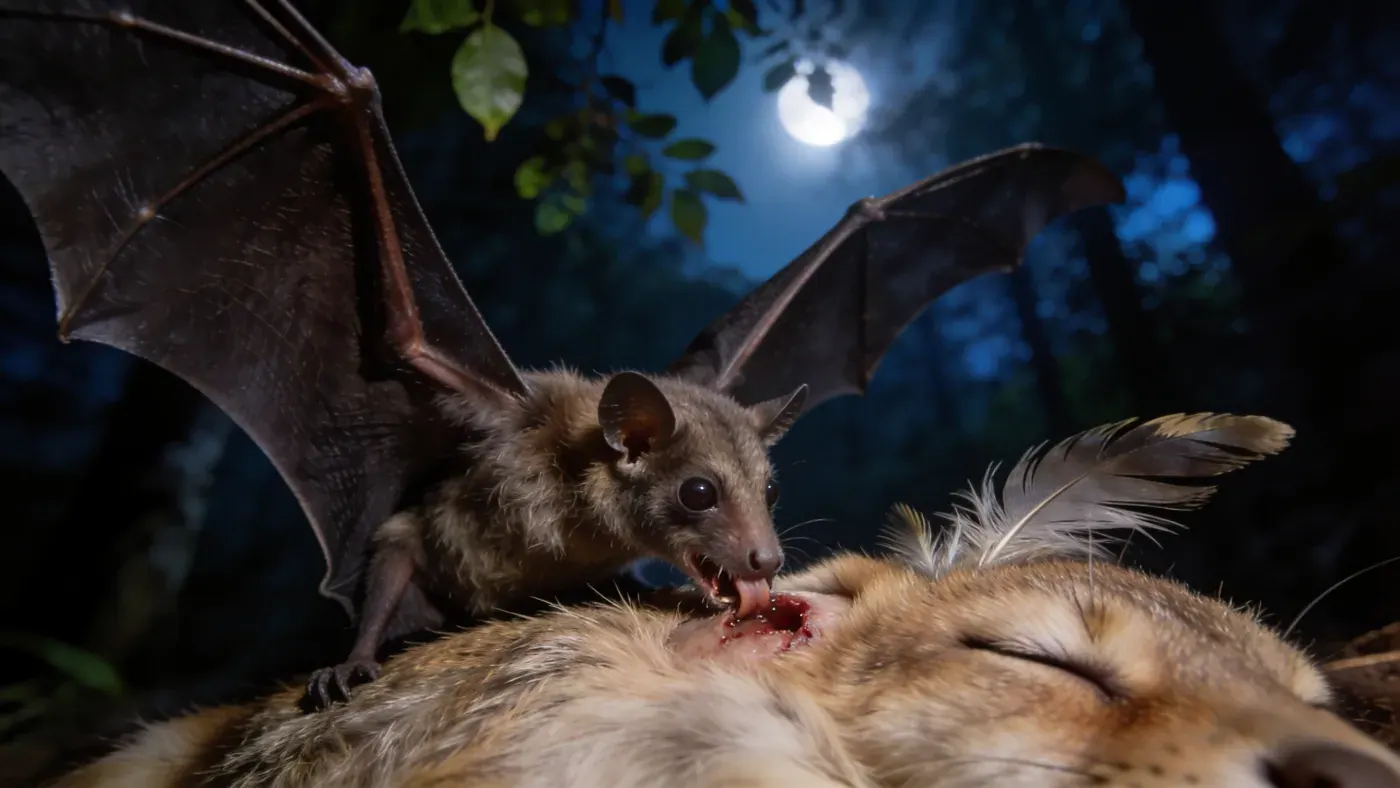
Rather than the dramatic imagery of folklore, a vampire bat makes a small, precise incision with razor-sharp teeth and laps up blood with its tongue — the wound is typically painless, thanks to an anticoagulant compound in the bat’s saliva that keeps blood flowing without clotting, and the prey animal loses only a modest amount of blood.
Mostly Livestock, Rarely People
Common vampire bats feed predominantly on the blood of livestock such as cattle and horses, with human bites being rare and generally occurring only where livestock is scarce — the species’ modern reputation as a livestock pest, rather than a human threat, is closer to reality than the folklore that inspired its name.
Remarkable Food Sharing
Vampire bats are one of the few mammals documented regularly sharing regurgitated blood meals with roost-mates that failed to feed successfully that night — a behavior tied to long-term reciprocal relationships between individuals that researchers consider a genuine example of reciprocal altruism in a wild animal.
A Real Rabies Concern
Vampire bats can transmit rabies, and in parts of Latin America bat-transmitted rabies in livestock and occasionally people is a genuine public health and agricultural concern, managed through targeted vaccination campaigns for livestock and, in some regions, controlled culling programs focused specifically on vampire bat populations.