Born in the Dark
Polar bear cubs are born in a snow den in the depth of the Arctic winter, usually in December or January. They arrive blind, nearly hairless and astonishingly small — around a pound in weight, roughly the size of a guinea pig, from a mother who may weigh over half a ton. Litters are usually two; single cubs and triplets both occur.
The Den
The den is excavated in a hard-packed snowdrift and consists of a short tunnel and one or more chambers. Inside, the temperature stays far above the outside air, warmed by the mother’s body. She does not eat, drink or eliminate for the whole denning period, living entirely on fat reserves while producing extremely rich milk — around a third fat — that lets the cubs grow quickly in the cold.
Emergence
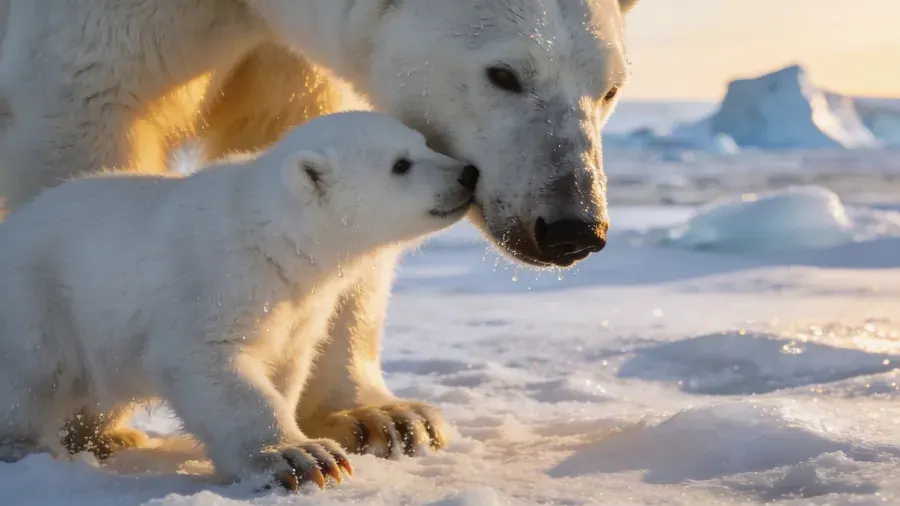
Mother and cubs leave the den in March or April, by which time the cubs weigh 20 to 30 pounds and can walk and follow. The first weeks outside are spent close to the den while the cubs build strength, then the family moves onto the ice so the mother can finally hunt. She will have gone without food for as long as eight months.
Learning to Hunt
Cubs stay with their mother for about two and a half years — far longer than most bears. That time is spent learning where seals are found, how to wait at a breathing hole, how to read ice conditions and how to avoid adult males, which will kill cubs. Play-fighting between siblings builds the strength and technique they will need alone.
Survival
Cub mortality is high, and it is closely tied to the mother’s condition when she entered the den. A female that could not build sufficient fat reserves during the previous ice season produces smaller cubs, less milk, or none that survive. This is the mechanism by which a shortened hunting season shows up in population numbers, and it is why cub survival is one of the figures biologists watch most closely.