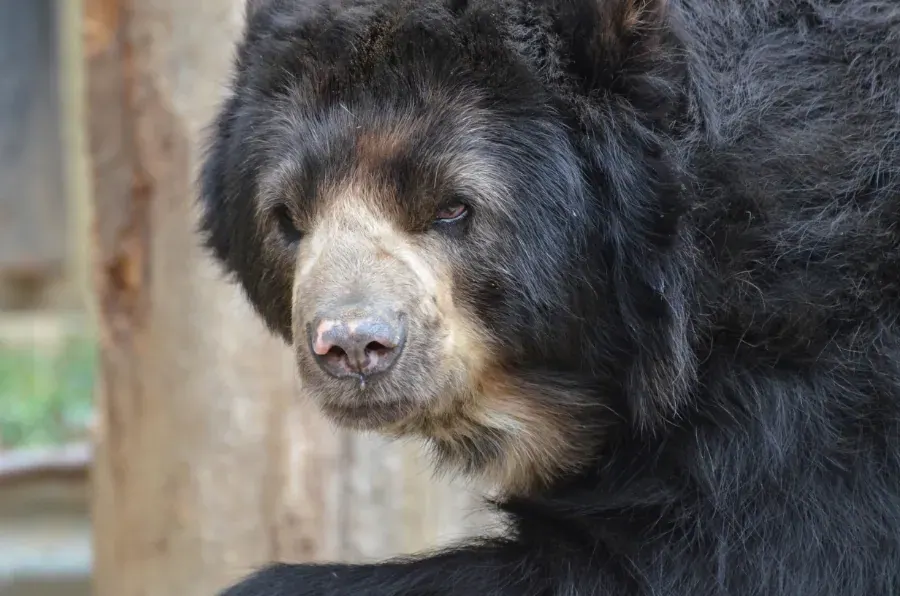
One Family, Eight Species
All bears belong to a single family, Ursidae, and there are only eight living species in it — a remarkably small family for animals so widely recognised. They are the American black bear, the Asiatic black bear, the brown bear, the polar bear, the giant panda, the sloth bear, the spectacled bear and the sun bear. Every bear on earth, from the 60-pound sun bear of Malaysian rainforest to the half-ton Kodiak of coastal Alaska, is one of those eight.
What Makes a Bear a Bear
Bears share a distinctive body plan: a heavy, deep-chested frame on relatively short legs, a long snout carrying an exceptional sense of smell, shaggy fur, a very short tail, and plantigrade paws with five claws that cannot be retracted. Walking flat on the soles of the feet is the trait that gives bear tracks their unsettlingly human appearance, and it is also what allows a bear to rise and stand upright so easily.
A Carnivore That Mostly Eats Plants
Bears sit in the order Carnivora, but most of them eat like omnivores and some barely eat meat at all. A brown bear’s year may be built around grasses, roots, berries and salmon in whatever proportion the season offers. The giant panda has gone furthest, with bamboo accounting for roughly 99 percent of its diet, while the polar bear has gone the opposite way and lives almost entirely on seals.
Solitary by Default
Apart from courting pairs and mothers with dependent cubs, bears live alone. They are not territorial in the way wolves are — home ranges overlap freely — but they generally avoid one another, communicating instead through scent marks and rubbed trees. Where food is unusually concentrated, such as a salmon run, bears will tolerate close company and sort out a temporary hierarchy by size and age.
Winter and Denning
Several species spend the coldest months in a den in a state of dormancy, during which heart rate and body temperature drop and the animal neither eats, drinks nor eliminates waste. It is not true hibernation in the strict physiological sense, and a denning bear can be roused. Cubs are born in the den, extraordinarily small and helpless — a newborn polar bear weighs about a pound — and nurse in the dark until spring.