The Central Problem
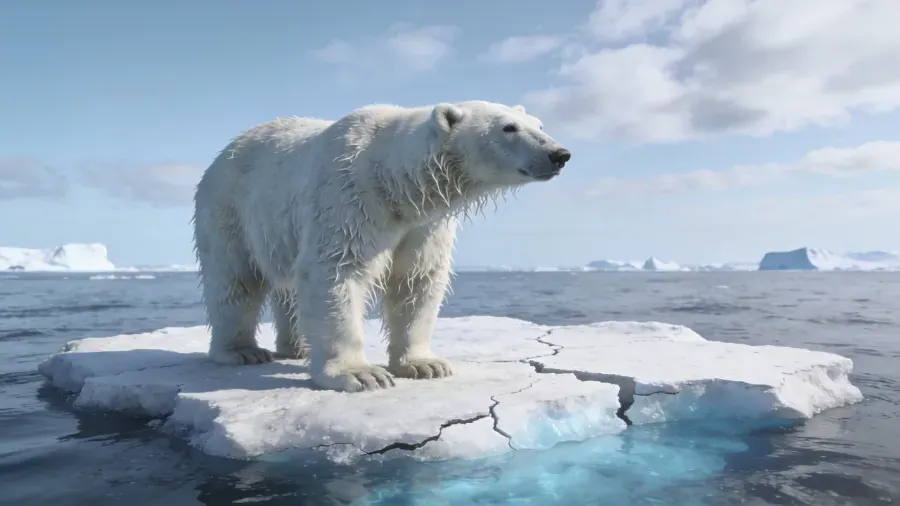
The polar bear’s difficulty is easy to state and hard to solve: it hunts from sea ice, and there is less sea ice each decade. Arctic summer ice extent has fallen substantially since satellite records began, and the ice-free season has lengthened across most of the species’ range. Fewer days of ice mean fewer days of hunting.
How It Shows Up in the Animals
The consequences appear first in body condition. Bears come ashore lighter, females enter maternity dens with smaller fat reserves, cubs are born smaller and fewer survive their first year. In western Hudson Bay, one of the most closely studied subpopulations, the on-shore fasting period has lengthened by several weeks since the 1980s and the population has declined. Similar patterns are emerging in other southern subpopulations.
Other Pressures
Sea-ice loss is the dominant threat, but not the only one. Persistent organic pollutants and mercury accumulate in Arctic food chains and concentrate in bear fat. Expanding shipping and oil and gas activity bring disturbance and spill risk into previously inaccessible waters. As bears spend longer ashore, encounters with communities rise, and more animals are killed in defence of life and property.
What Is Being Done
All five range states protect polar bears and cooperate under the 1973 conservation agreement; commercial hunting ended decades ago and subsistence harvest is managed by quota. Communities have invested in bear monitors, secured waste handling and deterrent programmes that reduce lethal removals. Critical denning habitat has been mapped and given protection in several jurisdictions.
The Limit of Local Action
Every one of those measures helps, and none of them addresses the ice. Population models consistently show that the species’ long-term outlook depends on the trajectory of Arctic warming rather than on hunting rules or local management. Polar bears are, unusually among threatened species, an animal whose fate is decided almost entirely outside their range.