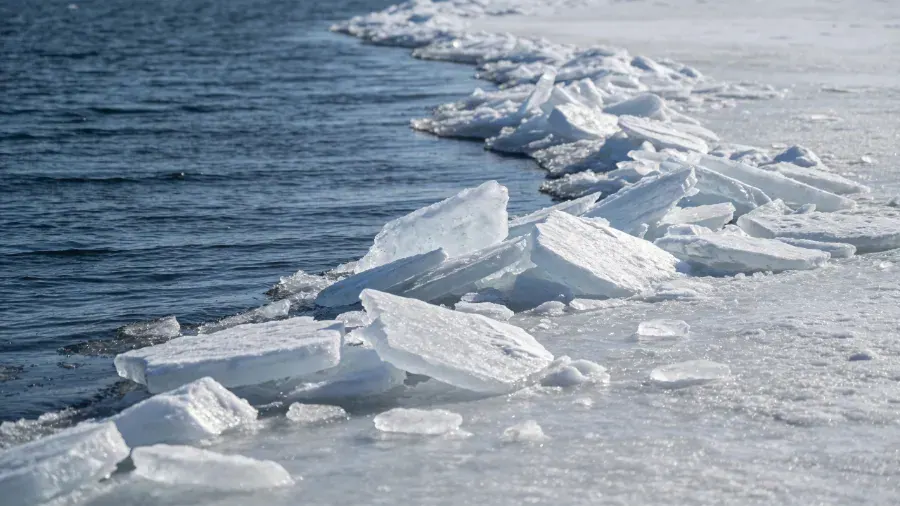
Sea Ice Is the Habitat
It is tempting to describe the polar bear as an animal of the Arctic coast, but the accurate description is an animal of the sea ice. Ice is the platform from which seals are hunted, the surface across which bears travel, and in many regions the place where they mate. Land is where polar bears wait when the ice is gone.
The Productive Zones
Not all ice is equally useful. The most valuable habitat is the annual ice over the continental shelf, where nutrient-rich shallow water supports the fish that support the seals. Bears concentrate along the floe edge, around pressure ridges and near persistent leads and polynyas — places where ice meets water and seals must surface to breathe. Thick, unbroken multi-year ice far from shore is comparatively barren.
The Seasonal Cycle
In much of the range the ice forms in autumn, reaches its maximum extent in late winter, and breaks up in early summer. Spring, when seal pups are in their birth lairs, is the critical feeding window; bears gain most of their annual fat in a few weeks. Where the ice melts out completely, bears come ashore and fast, living on stored fat until freeze-up.
Maternity Denning
Pregnant females need deep, stable snowdrifts for maternity dens, usually within a few dozen miles of the coast, though in Alaska some den on drifting sea ice. Dens must hold their structure through winter and insulate newborn cubs from the outside air. Earlier spring thaw and thinner snowpack both put denning success at risk.
A Shrinking Platform
Across the Arctic, ice now forms later and breaks up earlier, and the total summer extent has declined markedly. In the southern parts of the range this translates directly into a longer on-shore fast — several weeks longer in western Hudson Bay than a few decades ago — with measurable effects on body condition and cub survival. Habitat protection for polar bears is, in the end, a question of climate.