What Makes a Teddy Bear
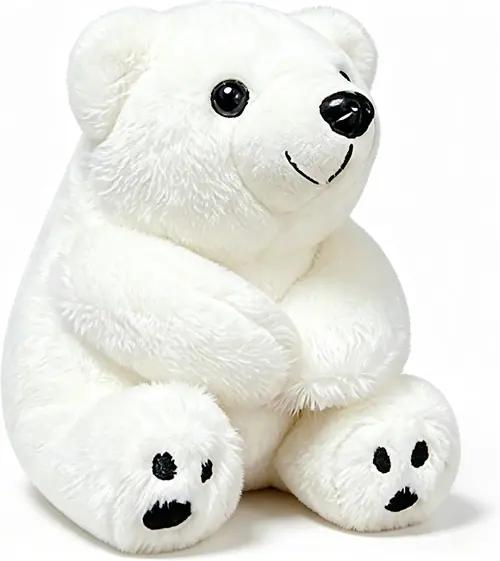
A teddy bear is a stuffed toy bear, traditionally jointed at the shoulders and hips so the limbs rotate, with a stitched snout, glass or plastic eyes and a plush covering — originally mohair, later synthetic fibre. The jointing is what distinguishes a traditional teddy from a generic soft toy, and it is the feature collectors look for first.
A Century of Makers
Steiff of Germany, founded in 1880 and producing bears from 1902, remains the reference maker, identified by the button in the ear it introduced in 1904. In Britain, Merrythought, Chad Valley and Dean’s produced bears from the early twentieth century. In the United States, the Michtoms’ Ideal company grew out of the original Brooklyn bear. Each maker’s house style — muzzle length, hump, foot shape, eye placement — is distinctive enough to date and attribute bears with reasonable confidence.
Collecting
Teddy bear collecting, sometimes called arctophily, is a well-established field with its own auctions, fairs and specialist literature. Value depends on maker, age, condition, rarity and originality — a bear that has been re-covered, re-stuffed or given replacement eyes loses much of its worth. Early Steiff bears in original condition are among the most valuable toys ever sold at auction.
Bears in Books
The teddy bear became a literary figure almost as quickly as a commercial one. A. A. Milne’s Winnie-the-Pooh, published from 1926 and based on his son’s bear, and Michael Bond’s Paddington, from 1958, gave the toy a durable place in children’s literature. Both are teddy bears rather than wild bears, and both are gentle, well-mannered and preoccupied with food — a characterisation with no relationship whatever to Ursidae.
Safety and the Modern Bear
Contemporary teddy bears are made to child safety standards that antique bears do not meet: embroidered rather than glass eyes for infants, no wired limbs, flame-retardant filling and secure seams. Collectible reproduction bears are generally sold as adult collectors’ items rather than toys for exactly this reason.