An Island Subspecies
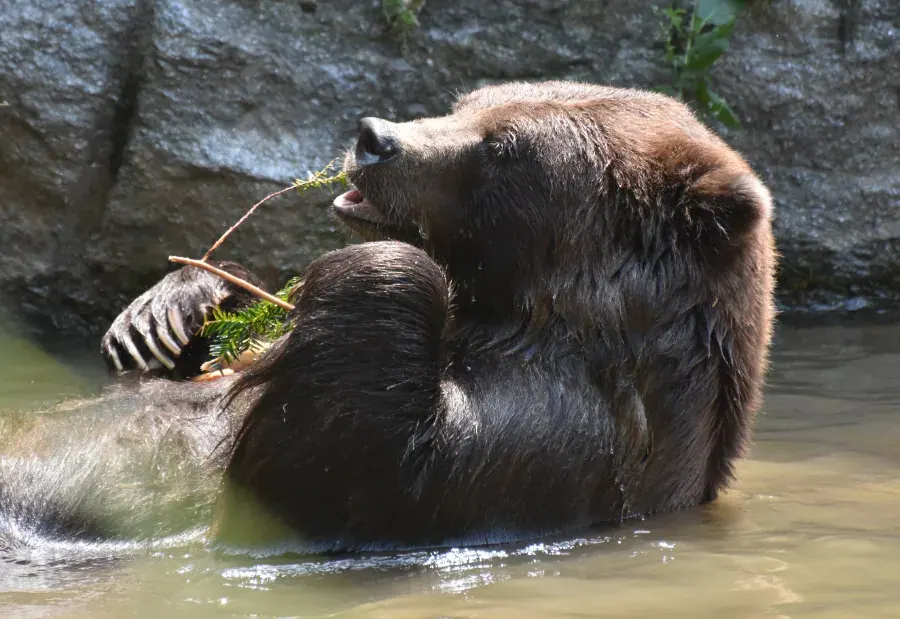
The Kodiak bear is a subspecies of brown bear, Ursus arctos middendorffi, found only on the Kodiak Archipelago off southern Alaska. It has been isolated there since the end of the last ice age, roughly 12,000 years, and that isolation has produced the largest brown bears in the world — rivalled only by the polar bear among living land carnivores.
Size
Large males commonly reach 1,000 to 1,500 pounds and stand around ten feet tall on their hind legs. Females run roughly a third smaller. The size is a product of food rather than genetics alone: the archipelago’s salmon runs supply an extraordinary quantity of protein and fat in a short window, and a Kodiak can put on hundreds of pounds in a single summer and autumn.
Salmon and Season
The bears emerge from dens in spring and feed on vegetation and winter-killed carrion before the first salmon arrive in the early summer. From June through September the rivers carry successive runs of five salmon species, and the bears concentrate along them in numbers that would be impossible at any other time of year. Berries in late summer add sugar for the final push toward denning.
Population and Protection
There are roughly 3,500 Kodiak bears on the archipelago, and the population is considered healthy and stable — one of the clearer conservation successes among the world’s large carnivores. Much of the habitat is protected within the Kodiak National Wildlife Refuge, and hunting is tightly regulated through a permit lottery, with harvest numbers set to keep the population steady.