Reshaping Landscapes Through Dam-Building
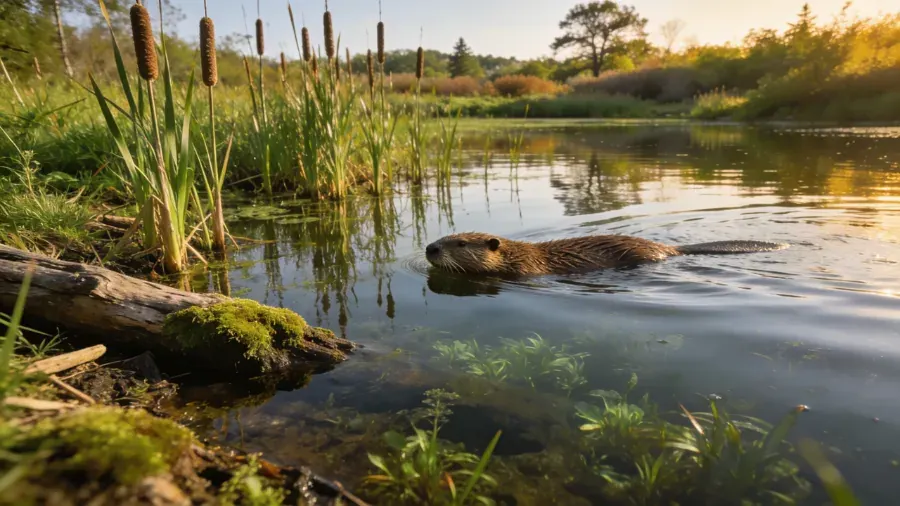
Few animals reshape their environment as dramatically as beavers. By damming streams, beavers create ponds and wetlands where none existed before, transforming fast-flowing water into the still, deep pools they need for protection and for accessing their lodges from underwater entrances.
A Ripple Effect Across the Food Web
The wetlands beavers create become rich habitats for countless other species — fish, amphibians, waterfowl, and insects all benefit from the slower water and increased plant growth around beaver ponds. Because of this outsized influence, ecologists consider the beaver a "keystone species," meaning its presence or absence dramatically shapes the entire ecosystem around it.
Natural Flood Control and Water Filtration
Beaver dams slow the flow of water through a watershed, which helps reduce flooding downstream during heavy rains and maintains water levels during dry periods. The ponds also act as natural filters, trapping sediment and pollutants and improving water quality as it moves through the system.
A Growing Tool in Conservation
Recognizing these benefits, some conservation programs now deliberately reintroduce beavers to degraded watersheds as a low-cost way to restore wetlands, recharge groundwater, and support biodiversity — turning what was once seen as a nuisance species into a valued partner in habitat restoration.