Listed as Vulnerable
The binturong is classified as Vulnerable by the IUCN, with wild populations believed to have declined significantly over the past three generations. It has already disappeared from parts of its historical range, including much of Java, where deforestation has been especially severe.
Deforestation for Agriculture
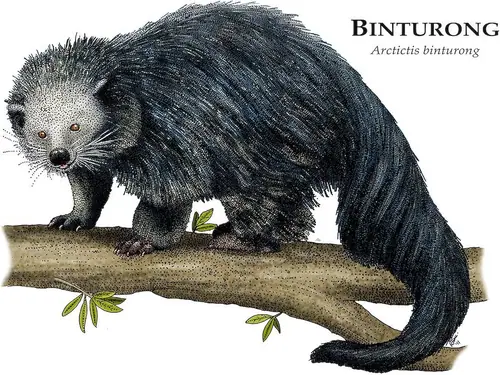
Large-scale clearing of Southeast Asian rainforest for palm oil plantations and other agriculture is the primary driver of binturong decline. Because binturongs are almost entirely arboreal, spending the vast majority of their lives in the forest canopy, they are particularly sensitive to forest fragmentation, which limits their ability to move between suitable habitat patches.
Hunted for Meat and the Pet Trade
Binturongs are hunted in parts of their range for bushmeat and traditional medicine, and are also captured for the exotic pet trade, where their docile temperament makes them a target despite legal protections in many countries.
Protected Areas and Captive Breeding
Several national parks across the binturong's range provide some protection, and zoos worldwide participate in cooperative breeding programs intended to maintain a genetically diverse captive population as insurance against further declines in the wild.