Grass Above Nearly Everything Else
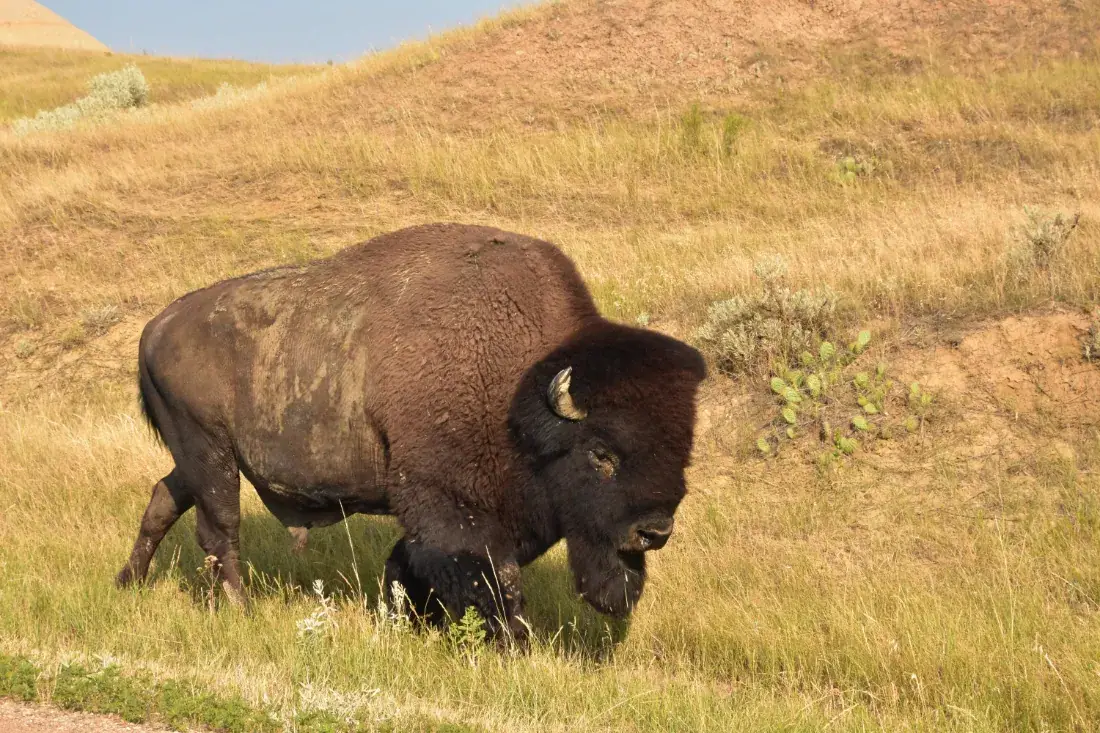
Bison are grazers whose diet consists almost entirely of grasses and sedges, which can make up more than 90 percent of what they eat. An adult bison can consume 24 to 32 pounds of vegetation a day, using its broad, muscular tongue and lips to pull grass rather than bite it, and its large head to sweep snow aside when foraging in winter.
A Rumen Built for Tough Plant Fiber
As ruminants, bison have a four-chambered stomach that lets them digest the tough cellulose in grass through fermentation and repeated chewing of cud. This efficient digestive system allows bison to extract nutrition from coarse, low-quality forage that many other grazing animals cannot use effectively.
Constant Movement Prevents Overgrazing
Bison herds graze an area intensively and then move on, a pattern that mimics natural rotational grazing and allows plant communities time to recover. This grazing style, developed over thousands of years on the open plains, actually promotes greater plant diversity compared to land grazed continuously by livestock kept in one place.
Winter Foraging Under Snow
Unlike many grazing animals that struggle in winter, bison use their heads like plows to sweep away snow and reach dormant grass underneath, a behavior that lets them remain on the open plains year-round rather than migrating to lower ground.