Mostly a Grazer, Not a Hunter
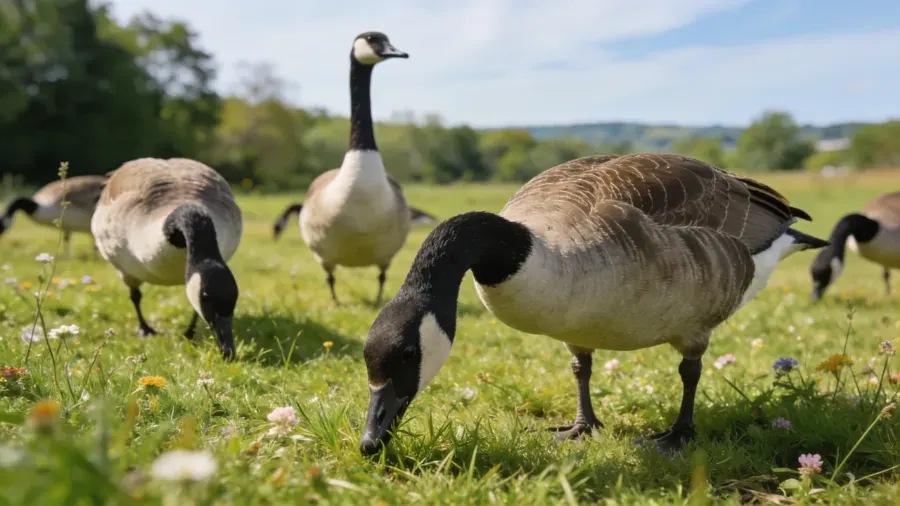
Canada geese are primarily herbivores, spending much of their day grazing on grasses, sedges, and grains in fields, lawns, and parks. Their diet shifts seasonally, including berries, seeds, and agricultural crops like corn and wheat when available, along with aquatic plants pulled from shallow water.
Why Manicured Lawns Are So Appealing
Short, well-fertilized grass found on golf courses, athletic fields, and suburban lawns is especially attractive to Canada geese because it's easy to graze and offers clear sightlines to spot approaching predators. This preference is a major reason the species has become so common — and sometimes unwelcome — in parks and corporate campuses.
Tipping Up for Underwater Plants
When foraging in water, Canada geese will tip forward with their tails in the air, submerging their heads and necks to reach aquatic vegetation growing just below the surface, a feeding posture shared with many dabbling duck species. Goslings, meanwhile, feed almost entirely on insects and soft vegetation during their first weeks of rapid growth.
Eating More Before Migration
In late summer and fall, Canada geese increase their feeding to build fat reserves ahead of migration, often gathering in large flocks on agricultural fields to feed on leftover grain after harvest. This heavy pre-migration feeding is essential fuel for flights that can cover hundreds of miles at a stretch.