Why They Fly in a V
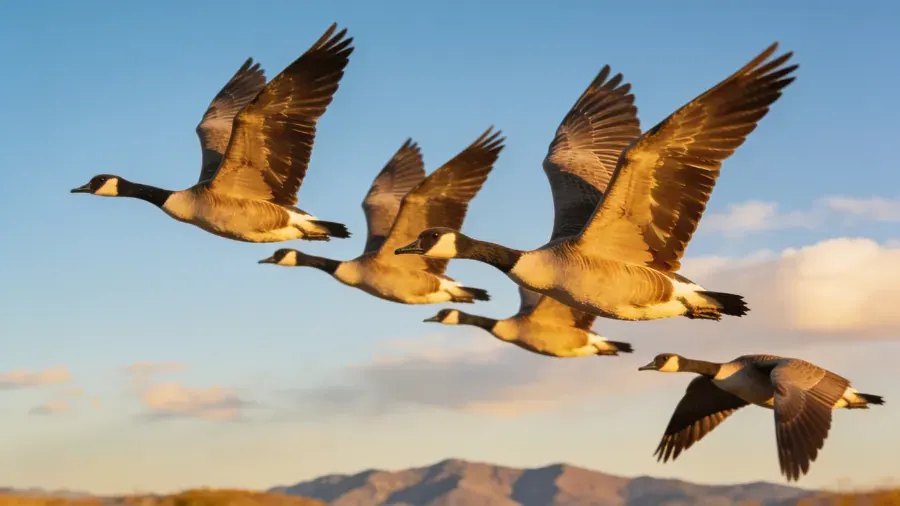
Canada geese migrate in the familiar V formation because each bird benefits from the reduced air resistance created by the wingbeats of the bird ahead, conserving energy over long flights. Geese also rotate the lead position, since flying at the front is the most tiring spot in the formation.
Not Always Migratory
While northern populations migrate long distances between summer breeding grounds in Canada and Alaska and wintering areas across the southern United States, many resident populations in temperate areas with reliable food and open water no longer migrate at all, staying put year-round.
Navigating by Memory and Landmarks
Geese learn migration routes from older birds in their flock and rely on visual landmarks, the position of the sun, and possibly the Earth’s magnetic field to navigate. Young geese make their first migration alongside parents and retain the route for life.