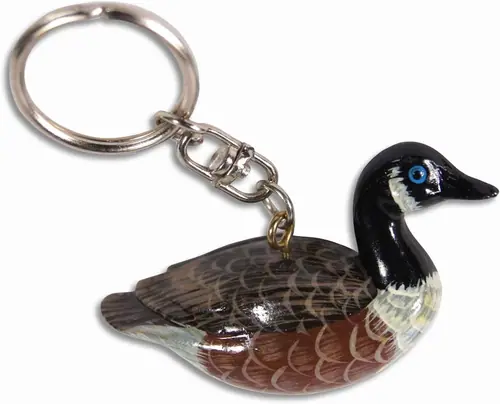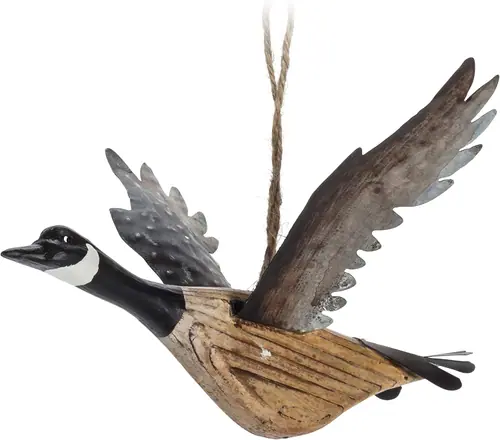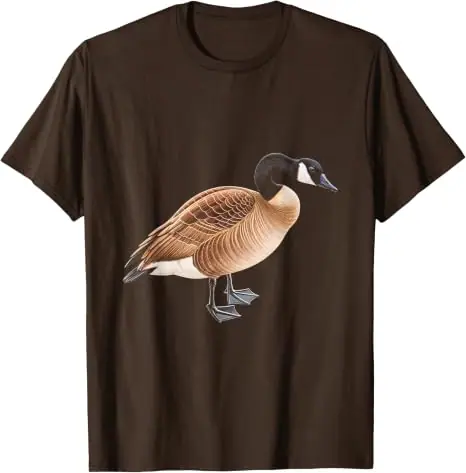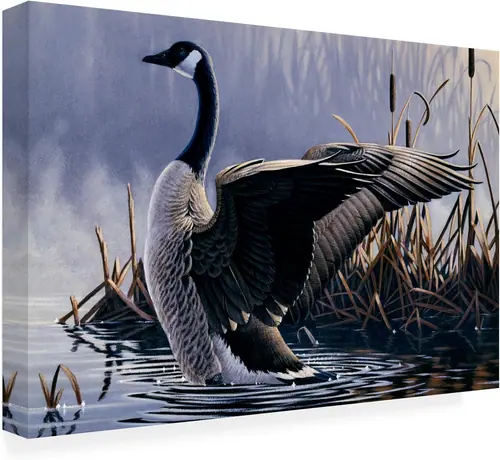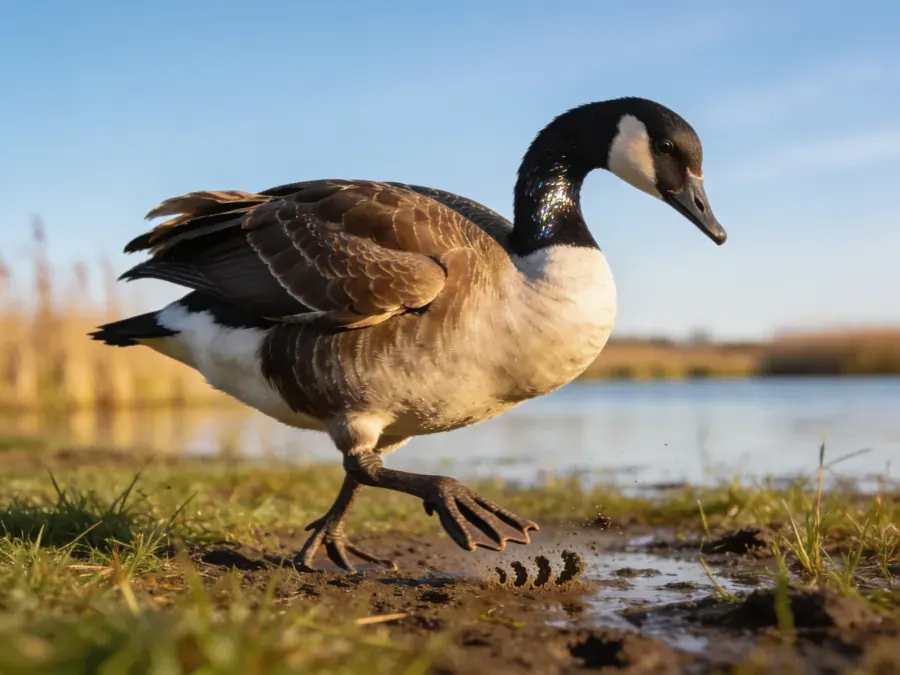
The Canada goose, Branta canadensis, is one of the most widespread and recognizable waterfowl in North America. It is easily identified by its black head and neck, white chinstrap and brownish-gray body. Adults weigh roughly 6 to 14 pounds, stand about two and a half to three and a half feet tall and have wingspans of roughly four to six feet, making them the largest geese commonly seen across the continent.
Migration and the V formation
Many Canada geese migrate between northern breeding grounds and southern wintering areas, flying in the familiar V formation. Flying in the draft of the bird ahead reduces effort, and the lead position rotates among the flock. Not all populations migrate, however — large numbers of resident geese now live year-round in parks, golf courses and suburbs across the continent.
Pairs for life and nesting
Canada geese form long-term pair bonds, often lasting for life. The female builds a ground nest near water and incubates typically four to six eggs for about 25 to 28 days while the gander stands guard. Goslings hatch covered in down, leave the nest within a day and feed themselves, though both parents protect them fiercely until they can fly at about two months.
Diet and range
Geese are grazers that feed on grasses, sedges, grain and aquatic plants, using serrated bill edges to tear vegetation. The species ranges from the Arctic to northern Mexico and has been introduced to Europe, New Zealand and elsewhere. Wild birds often live 10 to 24 years.
Living with people
Mowed lawns, retention ponds and few natural predators have made towns and suburbs ideal for Canada geese, and many populations no longer migrate at all. Nesting pairs defend their territory aggressively, which is why geese hiss and charge near goslings. In the United States the species is protected under the Migratory Bird Treaty Act, so nests and eggs generally cannot be disturbed without a permit. See Why Canada Geese Thrive in Cities and Suburbs.
Where to read next
Follow the flocks in Canada Goose Migration Explained, see what they eat in Canada Goose Diet and Feeding, and meet the family in Canada Goose Family Life. For the quick facts, see the Canadian Geese species page.