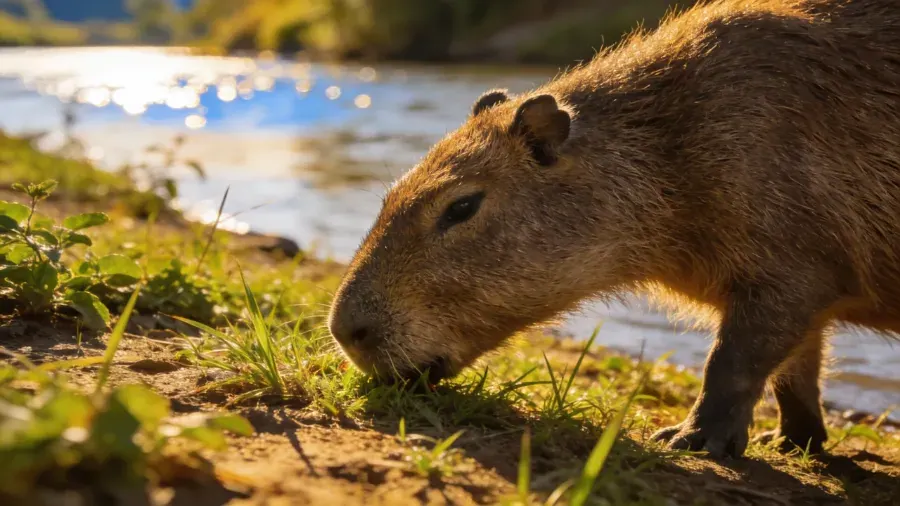
A Grazer Built Around Water
As the world's largest rodent, the capybara lives almost exclusively near rivers, lakes, marshes, and swamps across South America, rarely straying far from water. Its diet is almost entirely herbivorous, consisting of grasses, aquatic plants, fruits, and tree bark, with individual capybaras eating as much as eight pounds of vegetation a day.
Webbed Feet and a Body Made for Swimming
Capybaras have partially webbed feet that make them strong, capable swimmers, and their eyes, ears, and nostrils sit high on the head, allowing them to remain almost fully submerged while still seeing, hearing, and breathing. They can hold their breath underwater for up to five minutes, often diving to escape predators like jaguars and caimans.
Eating Its Own Droppings for Extra Nutrition
Like rabbits, capybaras practice coprophagy, re-ingesting some of their own droppings to extract additional nutrients from fibrous plant material that wasn't fully digested the first time. This behavior helps them get the most out of the tough grasses that make up much of their diet.
Continuously Growing Teeth for Constant Grazing
A capybara's teeth grow continuously throughout its life to compensate for the constant wear caused by grazing on tough, fibrous grasses. This adaptation is shared with many other rodents, but is especially important for the capybara given how much low-nutrient vegetation it must consume each day to sustain its large body size.