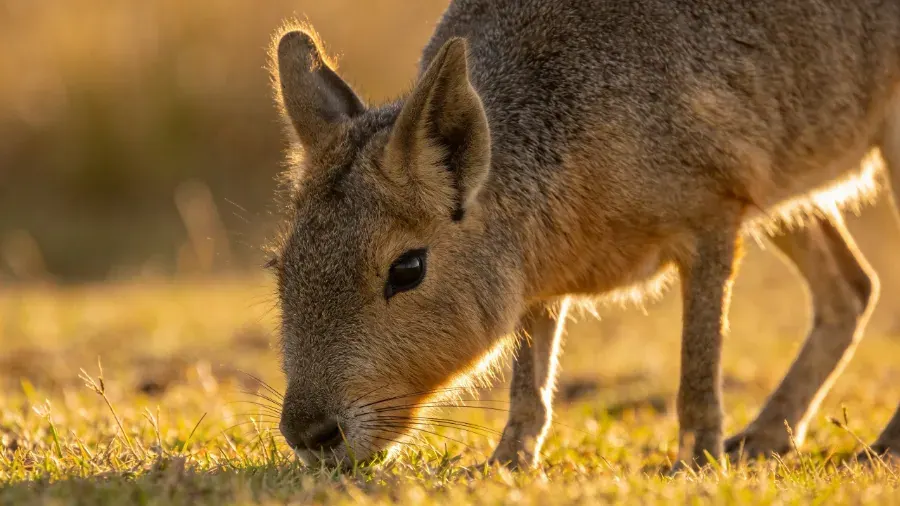
Grasslands, Not Just Cages
Wild cavies, the ancestors of the domesticated guinea pig, live across South America in grasslands, savannas, forest edges, and rocky terrain, favoring areas with dense vegetation that offers cover from predators. Unlike their domesticated relatives, wild cavies must constantly balance feeding with staying alert to hawks, foxes, and other predators.
Strict Herbivores With a Taste for Variety
Cavies are herbivores that feed on grasses, leaves, stems, seeds, and fruit, adjusting their diet seasonally based on what's available. Like guinea pigs, wild cavies cannot produce their own vitamin C and must get it entirely through their diet, a trait shared with humans but unusual among mammals.
Following Well-Worn Paths to Feed
Cavies often create and reuse narrow trails through grass and brush, moving along the same paths repeatedly to reach reliable feeding areas while minimizing time spent exposed in the open. This path-following behavior helps reduce the risk of predation during the vulnerable process of foraging.
Practicing Coprophagy for Extra Nutrients
Like capybaras and rabbits, cavies re-ingest a portion of their own droppings, a practice called coprophagy that lets them extract additional nutrients from plant fiber that wasn't fully broken down the first time through their digestive system.