Not Primarily for Camouflage
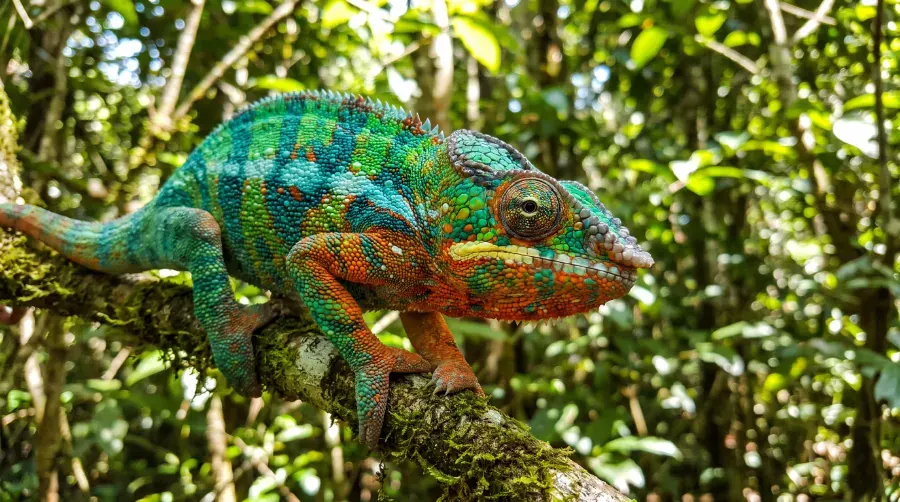
Contrary to popular belief, chameleons change color mainly to communicate with other chameleons and to regulate their body temperature — not primarily to blend into their surroundings.
A Signal of Mood and Status
Brighter, more vivid colors often signal aggression or readiness to mate, while duller tones can indicate stress or submission.
How the Color Change Works
Chameleons change color by adjusting specialized skin cells called chromatophores, which contain pigments and light-reflecting crystals that shift how light bounces off the skin.