A Grey Mantle at Birth
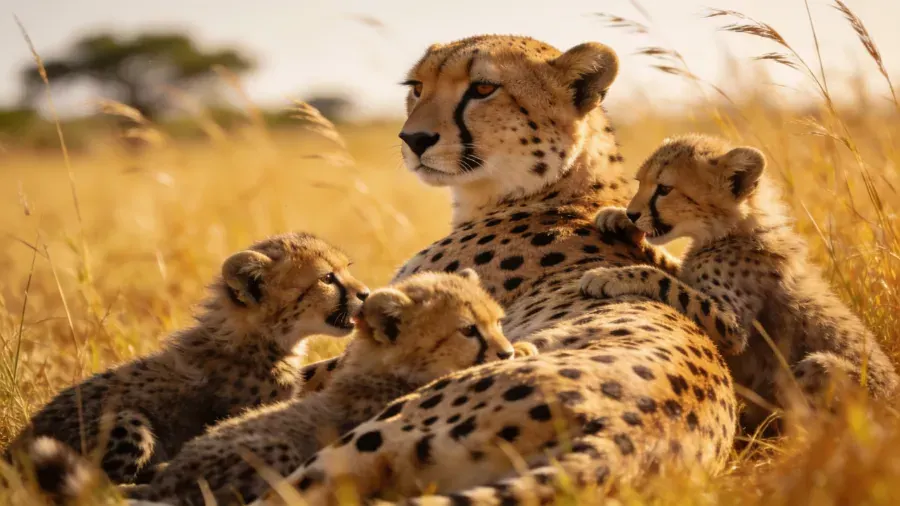
Cheetah cubs are born blind and helpless, weighing about half a pound, and carry a distinctive smoky-grey mane of long fur running down the back and shoulders. Biologists believe this mantle helps hide cubs in grass and may also cause them to resemble a honey badger — a small, aggressive animal that most predators avoid — offering a young cub some protection it cannot yet provide for itself.
The Highest Cub Mortality of Any Big Cat
Cheetah cub mortality is extraordinarily high, with well over half of all cubs dying before their first birthday in some populations, chiefly to lions, hyenas and leopards. Mothers cannot defend a den site the way a leopard can from a tree, and must instead move cubs frequently between hiding spots in tall grass to avoid detection.
Learning to Hunt
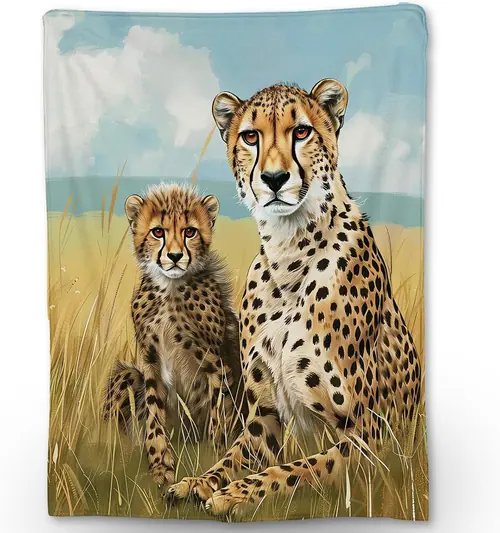
Cubs stay with their mother for roughly 18 months to two years, during which she teaches them to hunt — sometimes releasing live prey for cubs to practice a chase and kill themselves. Litters that survive to independence often stay together as a sibling group for several more months after leaving their mother, giving young cheetahs a period of relative safety in numbers before males and females eventually separate.
Male Coalitions Begin Here
Male cubs from the same litter frequently stay together for life once independent, forming the small coalitions of two or three related males that are one of the more unusual social arrangements among cats. Female cheetahs, by contrast, become solitary as adults except when raising their own cubs.