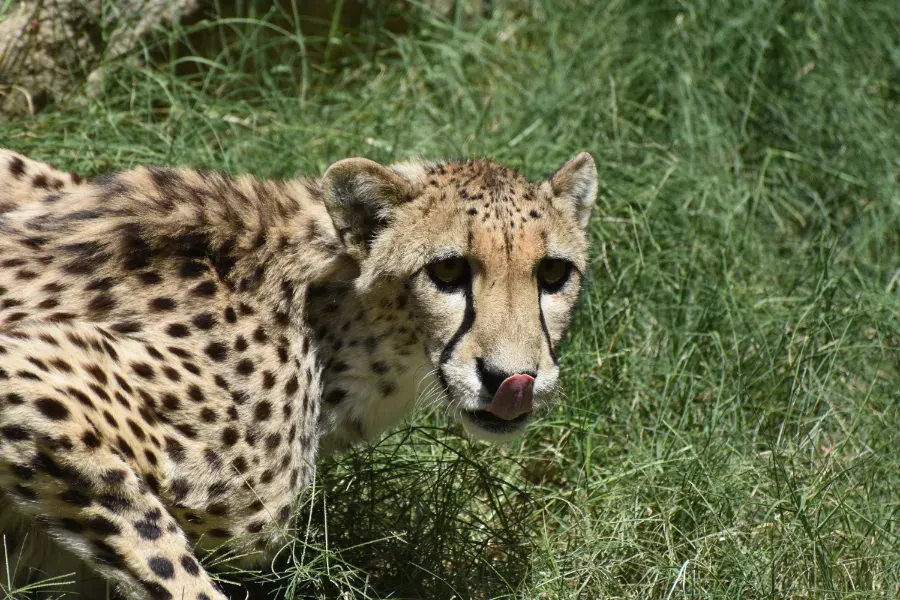
A Built-for-Speed Body
Every part of a cheetah’s anatomy serves acceleration. A small, light head reduces drag and weight up front; an enlarged heart, lungs and nostrils supply the oxygen a sprint demands; a long, flexible spine flexes and extends with each stride to add extra length to the animal’s reach. The result is the fastest land animal alive, but one built entirely around a short, explosive chase rather than raw strength or endurance.
Semi-Retractable Claws
Almost every cat retracts its claws fully to keep them sharp for climbing and gripping prey. The cheetah is the exception: its claws stay partly exposed at all times, working less like weapons and more like a sprinter’s spikes, biting into the ground for traction through the tightest turns of a chase.
Markings
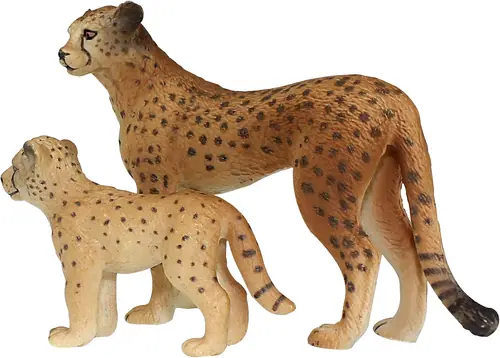
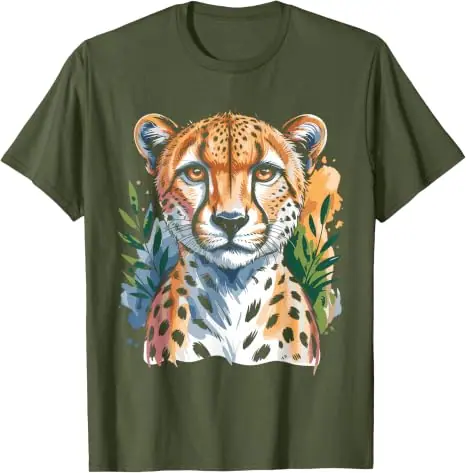
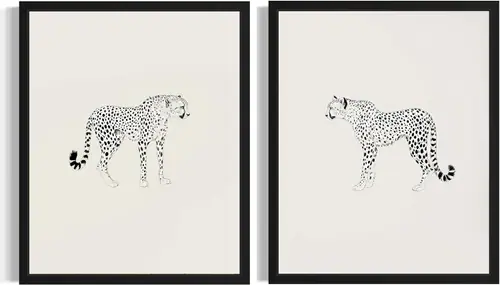
A cheetah’s coat carries solid round black spots on a tawny background, distinguishing it at a glance from the rosettes of a leopard. Distinctive black "tear lines" run from the inner corner of each eye down to the mouth, thought to reduce glare from the sun during daytime hunts, much like the grease paint worn by some athletes.
A Cat That Cannot Roar
Cheetahs belong to a different lineage from lions, tigers and leopards, and their vocal anatomy reflects it. They cannot roar; instead they chirp — a high, bird-like call used between mothers and cubs — along with purring, growling and hissing.
Range
Historically found across most of Africa and into the Middle East and India, cheetahs today occupy a small fraction of that range. The great majority of the remaining population lives in eastern and southern Africa, with a critically small population of fewer than 50 Asiatic cheetahs surviving in the Kavir Desert of Iran.