Mostly Fruit, but Far From Vegetarian
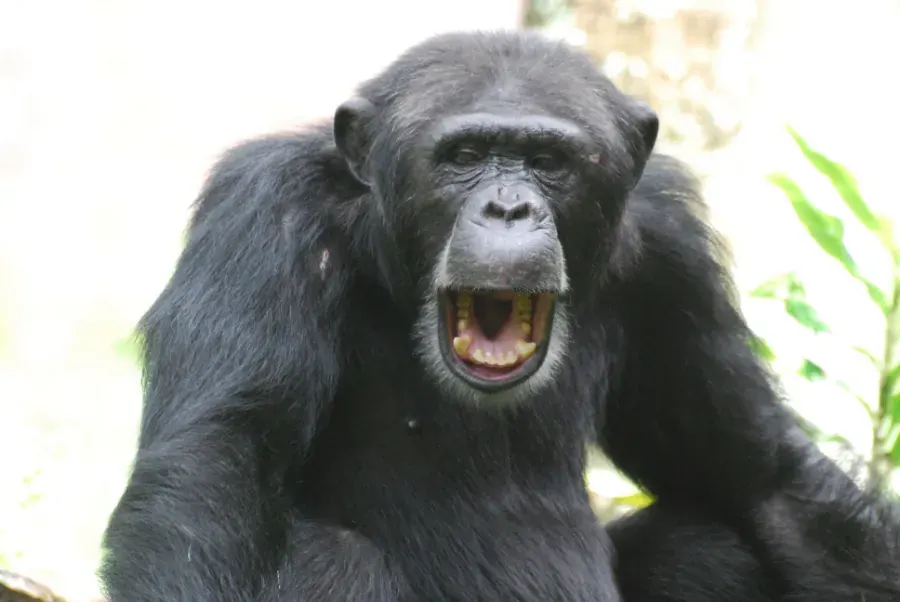
Fruit makes up roughly half to two-thirds of a wild chimpanzee's diet, supplemented by leaves, seeds, blossoms, bark, and insects like termites and ants. Chimpanzees are also opportunistic omnivores, occasionally hunting and eating meat from smaller mammals, including monkeys, in coordinated group hunts.
Memory Maps for Scattered Fruit Trees
Because fruiting trees are scattered unevenly across the forest and ripen at different times, chimpanzees rely on detailed spatial memory to track which trees are likely to be producing food at a given time of year, allowing them to travel efficiently between distant feeding sites rather than searching at random.
Termite Fishing With Modified Tools
Chimpanzees are well known for stripping leaves from twigs to create simple tools used to "fish" termites and ants out of their mounds, an example of tool modification passed down through observation and practice within a community. Different chimpanzee groups have developed distinct foraging tool traditions, a form of cultural variation among populations.
Cooperative Hunts for Meat
When chimpanzees hunt colobus monkeys or other small mammals, they often do so in coordinated groups, with individuals taking on different roles such as blocking escape routes or driving prey toward waiting hunters. Meat from a successful hunt is typically shared among group members, though not always equally, and can play an important role in social bonding and status.