Years at Mother's Side
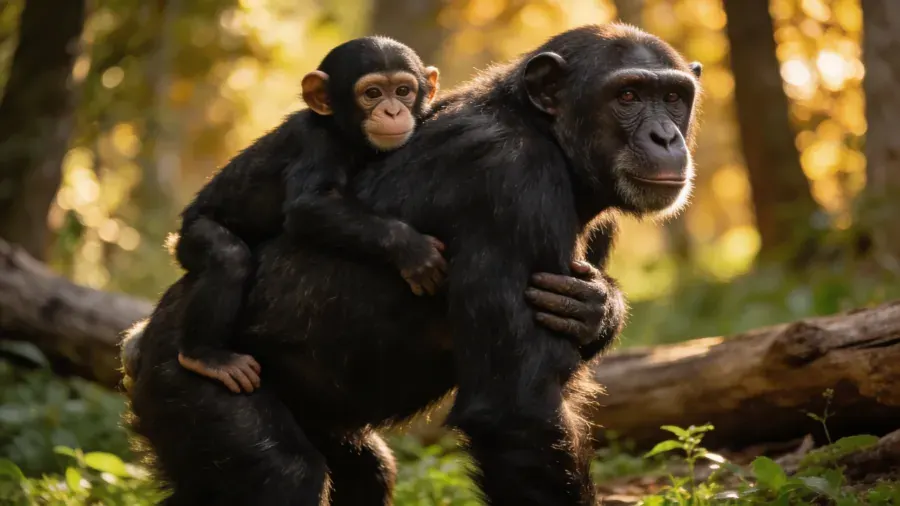
A chimpanzee infant clings to its mother's belly for the first months of life, later riding on her back, and stays nutritionally and socially dependent on her for up to five years — one of the longest childhoods of any non-human primate, closely mirroring the extended development seen in humans.
Male Bonds and Hierarchy
Unlike females, who often disperse to new communities at adolescence, male chimpanzees typically remain in their birth community for life, building alliances that shape a linear dominance hierarchy topped by an alpha male. Coalitions, grooming and occasional violent challenges all factor into who holds power.
Grooming as Social Glue
Chimpanzees spend hours each day grooming one another, an activity that goes beyond hygiene to reinforce alliances, calm tension after conflict, and comfort distressed group members — a social currency as important to chimpanzee life as food itself.
Learning Culture from Elders
Young chimpanzees learn how to use tools, which foods to eat, and how to navigate social relationships almost entirely by watching adults, particularly their mothers. This social transmission of knowledge, rather than instinct, is why different chimpanzee communities develop distinct behavioral "cultures."