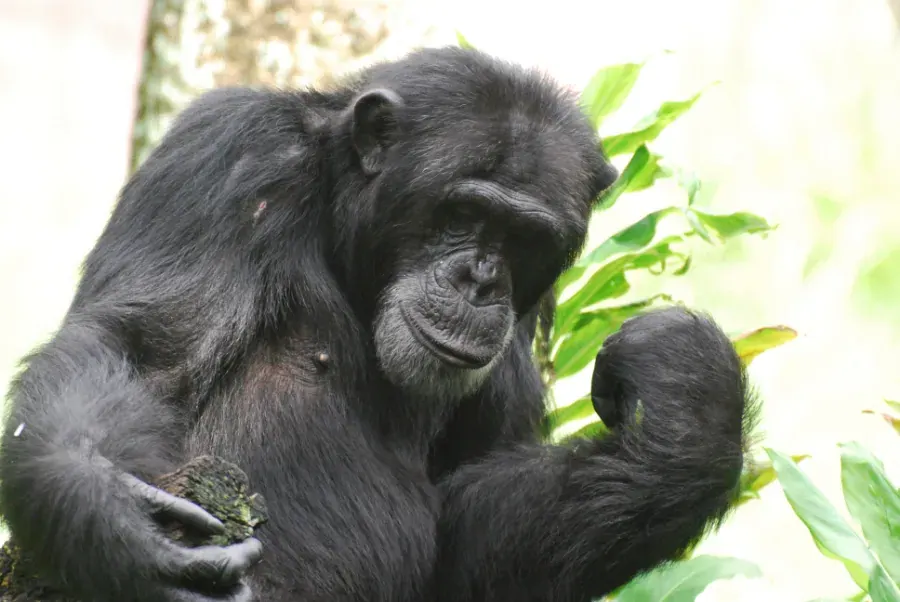
Termite Fishing
Chimpanzees strip leaves from a twig, insert it into a termite mound, and slowly withdraw it coated with insects to eat — a technique documented across many populations, each with slightly different tool preferences and mound-approach methods handed down within the group.
Stone Hammers and Anvils
In West Africa, chimpanzees place hard-shelled nuts on a stone or root "anvil" and crack them open with a second stone used as a hammer — a skill that takes young chimpanzees years to master and that leaves behind archaeological evidence of tool use dating back thousands of years.
Sponges, Levers and Spears
Beyond feeding tools, chimpanzees chew leaves into absorbent sponges to soak up water from tree hollows, use sticks as levers to pry open termite mounds or beehives, and in at least one studied population, sharpen sticks with their teeth to jab at small nocturnal primates hiding in tree hollows.
Culture, Not Instinct
Neighboring chimpanzee communities facing identical resources often use entirely different toolkits, showing that these behaviors are learned traditions rather than hard-wired instincts — one of the strongest pieces of evidence for culture existing outside the human species.