An Omnivore With a Preference for Seeds
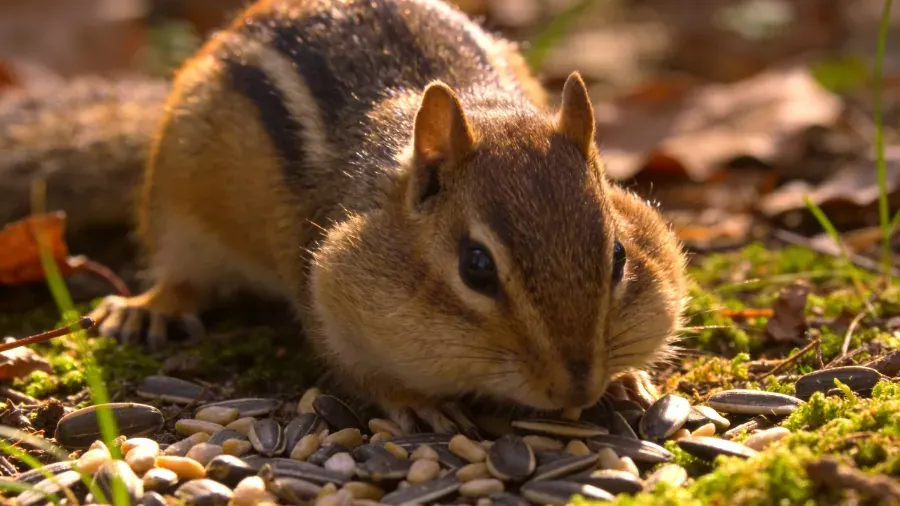
Chipmunks are opportunistic omnivores, eating nuts, seeds, berries, mushrooms, and grains, along with insects, small invertebrates, and occasionally bird eggs. Acorns, hickory nuts, and various seeds make up the bulk of their diet in most seasons, especially as they prepare for the food-scarce winter months.
Building Underground Pantries
Rather than relying on a single large stash, chipmunks scatter food into numerous small caches buried throughout their territory as well as larger stores kept in dedicated chambers within their burrow. A single chipmunk may create dozens of separate caches, hedging against the risk of losing an entire winter's food supply to a thief or a single flooded burrow.
Cheek Pouches as Portable Storage
A chipmunk's expandable cheek pouches, which can stretch to roughly three times the size of its head when full, let it collect large quantities of food in a single trip and transport it back to the burrow for storage rather than eating in the open where it's vulnerable to predators.
Light Winter Dormancy, Not True Hibernation
Unlike true hibernators, chipmunks enter a state of torpor in winter, waking periodically to feed on their cached food rather than relying entirely on stored body fat. This is why the fall caching effort is so critical — a chipmunk's survival through winter depends directly on how well-stocked its burrow pantry is.