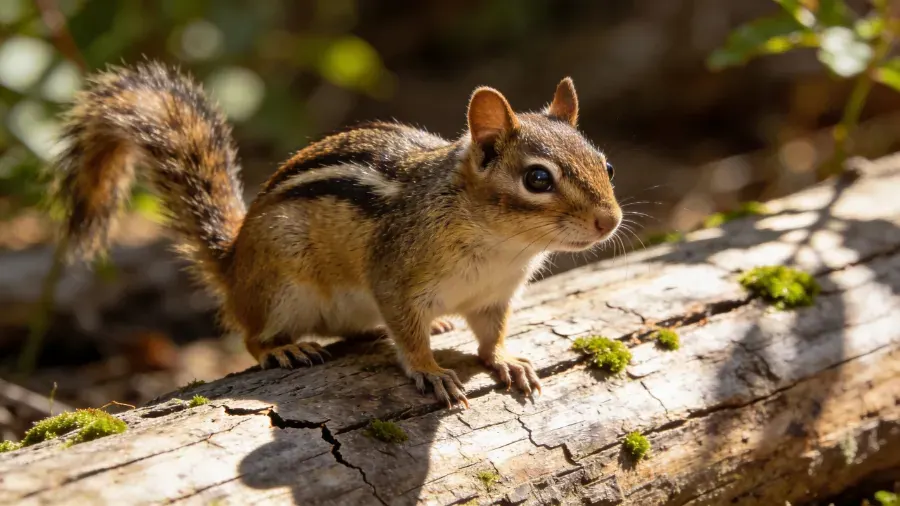
A Small Prey Animal With Many Enemies
Chipmunks face threats from a wide range of predators, including hawks, owls, snakes, foxes, weasels, coyotes, and domestic cats. Their small size and abundance make them an important food source throughout the food web, and as a result they rarely live more than two or three years in the wild.
A Sharp Alarm Call System
When a chipmunk spots danger, it emits a distinctive high-pitched chip or chuck call that warns nearby chipmunks of a threat. Some research suggests chipmunks may even use different calls to distinguish between aerial predators like hawks and ground predators like foxes, allowing others to respond appropriately.
Escape Routes Built Into the Burrow
A chipmunk's burrow system typically includes multiple entrances and exits, giving it several escape routes if a predator corners it near one opening. Burrow entrances are also often cleverly hidden, with excavated dirt carried away and scattered rather than left in a telltale pile, reducing the chance a predator can locate the den.
Speed and Stillness as Primary Tools
Chipmunks rely heavily on quick bursts of speed to reach cover and on freezing motionless when a predator is nearby, since sudden movement is more likely to attract attention than a still, camouflaged body. Their brown and black striped coat also helps break up their outline against leaf litter and forest floor debris.