A Diet Built Around Deer
Cougars are obligate carnivores, and deer make up the majority of their diet across most of their North American range. They also prey on elk, bighorn sheep, and smaller animals like rabbits, raccoons, and rodents when larger prey is scarce, giving them one of the broadest prey lists of any large cat in the Americas.
Ambush Predators, Not Chasers
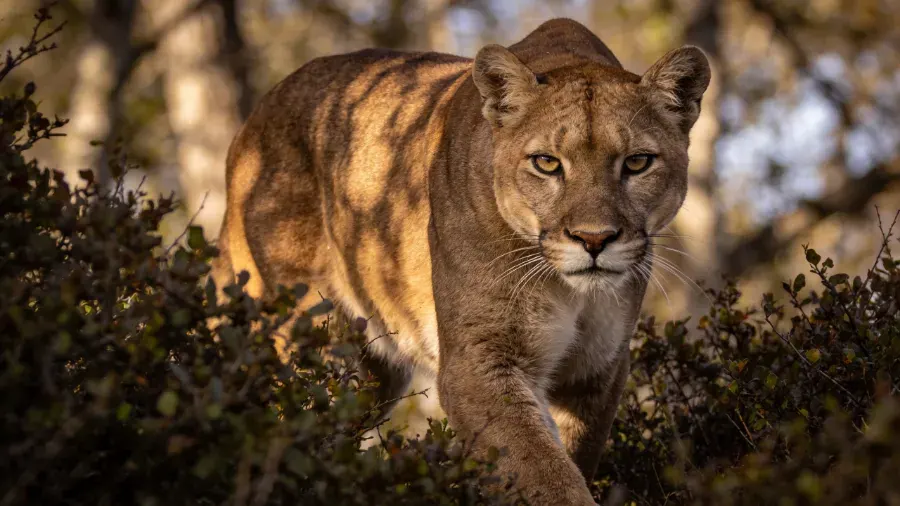
Unlike cheetahs, which rely on sustained speed, cougars hunt through stealth, stalking prey to within a few body lengths before launching a short, explosive charge and pouncing. This ambush strategy lets a cougar kill animals many times its own size, typically using a powerful bite to the back of the neck or throat.
Caching Kills to Return To
After a successful hunt, a cougar will often drag its kill to a hidden spot and cover it with leaves, dirt, or snow, a behavior called caching. This lets the cougar return to feed on the carcass over several days, since a single large kill like a deer can provide more food than the cougar can eat in one sitting.
Mostly Nocturnal and Crepuscular Hunters
Cougars do most of their hunting at dawn, dusk, and during the night, when their prey is most active and low light gives them an advantage in stalking undetected. A cougar's excellent night vision and quiet, padded feet make it especially effective in these low-light conditions.