More Attentive Than Most Reptiles
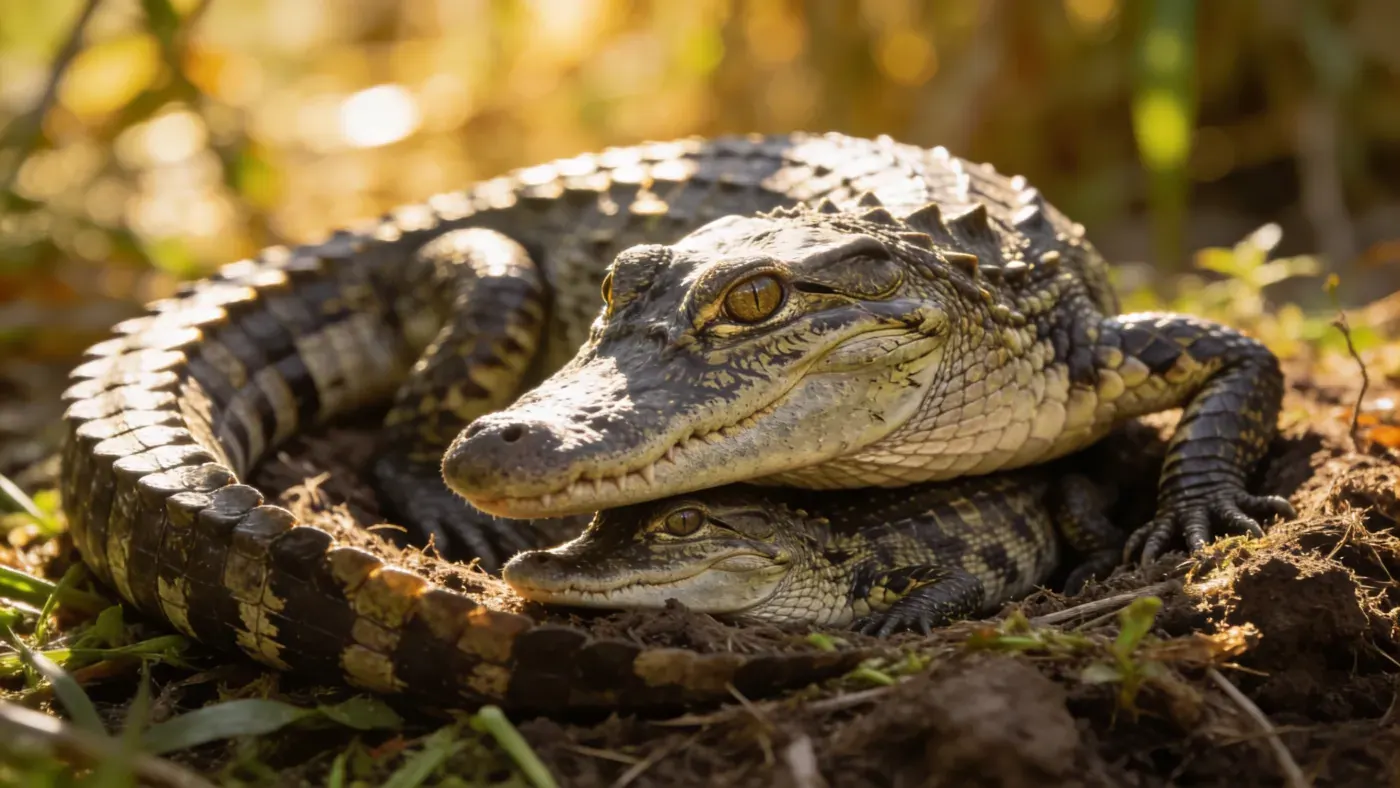
Crocodiles display a level of parental care that is unusual among reptiles, most of which abandon their eggs entirely after laying them. A female crocodile builds and guards her nest, and in many species continues protecting her young for weeks or months after hatching.
Nest Temperature Determines Sex
Like many reptiles, crocodiles have temperature-dependent sex determination, meaning the incubation temperature inside the nest — rather than genetics — determines whether hatchlings develop as male or female. This makes nest site selection, including shade, moisture, and material, a critical decision that affects the sex ratio of an entire clutch.
Helping Hatchlings Break Free
When hatchlings are ready to emerge, they produce chirping calls from inside their eggs that alert the mother, who then digs open the nest to help free them. In some species, the mother will even gently carry hatchlings in her mouth to the water, a striking display of care from an animal generally known for its predatory reputation.
Guarding Young Against Heavy Predation
Despite parental protection, crocodile hatchling survival rates are low, since eggs and young crocodiles face predation from birds, monitor lizards, fish, and even other crocodiles. A mother's continued presence near her young for the first weeks or months of life significantly improves their odds of survival during this especially vulnerable period.