Mammals · Cervids
White-Tailed Deer
Odocoileus virginianus
Least Concern
The white-tailed deer is the most widely distributed and abundant large mammal in North America, recognized by the bright white underside of its tail, flashed as an alarm signal when fleeing danger. Alert, fast and highly adaptable, it thrives from dense forest to farmland and suburban parks alike.
Classification
Kingdom: Animalia
Phylum: Chordata
Class: Mammalia
Order: Artiodactyla
Family: Cervidae
Genus: Odocoileus
Species: virginianus
Subspecies: 38 recognized, incl. the diminutive Key deer of Florida
Related species: Mule deer, elk, moose, caribou — all family Cervidae
Size
4.5–7 ft long; 3–3.5 ft at the shoulder. Bucks are noticeably larger than does.
Weight
110–300 lbs for bucks, 90–200 lbs for does, varying substantially with region and food supply.
Habitat
Forest edges, agricultural land, brushy fields and suburban parks across most of the United States, southern Canada and Central America.
Description
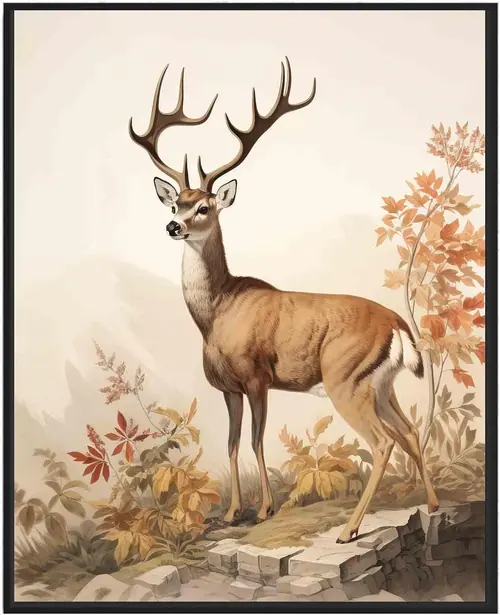
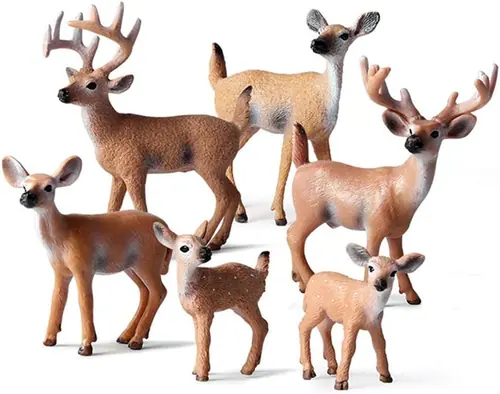
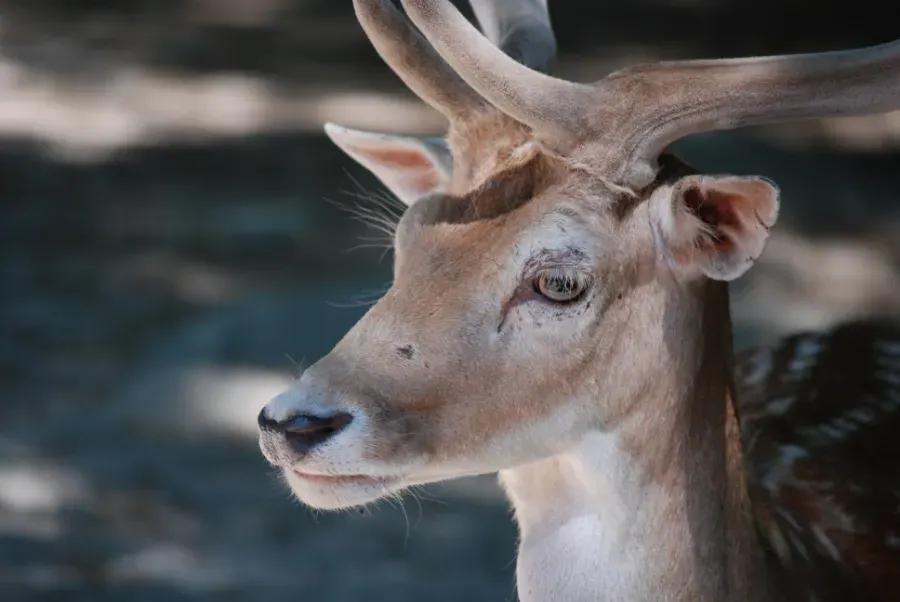
A reddish-tan coat in summer that turns greyish-brown in winter, with a distinctive bright white underside to the tail, raised as a flag when alarmed.
Diet
Herbivore — leaves, twigs, fruits, nuts, agricultural crops and grasses, adjusting seasonally to whatever is available.
Antlers
Grown and shed annually by males only, starting as soft "velvet"-covered tissue in spring and hardening by autumn rut, then dropped in winter.
Speed
Up to 30 mph, with jumps clearing 8 feet vertically or 30 feet horizontally in a single bound.
Senses
Excellent hearing and sense of smell; eyesight is tuned to detect motion rather than fine detail, and lacks red-tone color perception.
Gestation
About 200–205 days (roughly 6.5 months).
Birth & Litter Size
Usually 1–2 fawns (occasionally 3), born spotted for camouflage; spots fade by around 3–4 months.
Sexually Mature
About 1.5 years for both sexes, though bucks rarely breed successfully before 2–3 years due to competition.
Life Span
2–3 years average in the wild due to hunting and predation; up to 20 years in captivity.
Did You Know?
A buck's antlers are the fastest-growing bone tissue known in any mammal, capable of adding up to a quarter inch of growth in a single day during peak summer growth.
Did You Know?
Deer can't see the color red or orange well — their eyes lack the receptors for those wavelengths, which is part of why hunter-orange clothing stands out clearly to people but blends into the background for deer.
Did You Know?
A fleeing white-tailed deer raises its tail like a flag, flashing the bright white underside — a signal thought to warn other deer of danger and possibly to help fawns follow their mother through dense cover.
Deer in Foreign Languages
Frenchcerf de Virginie
GermanWeißwedelhirsch
Italiancervo dalla coda bianca
Portugueseveado-de-cauda-branca
Spanishvenado de cola blanca
Russianbelochvóstyj olén
Polishjeleń wirginijski
Ojibwewaawaashkeshi
Cherokeeahwi
Navajobįįh
Japaneseojirojika
Mandarinbáiwěilù
Koreanhuinkkorisasum
Greekeláfi
Turkishgeyik
Dutchwitstaarthert
Swedishvitsvanshjort
Irishfia
Welshcarw
Finnishvalkohäntäpeura