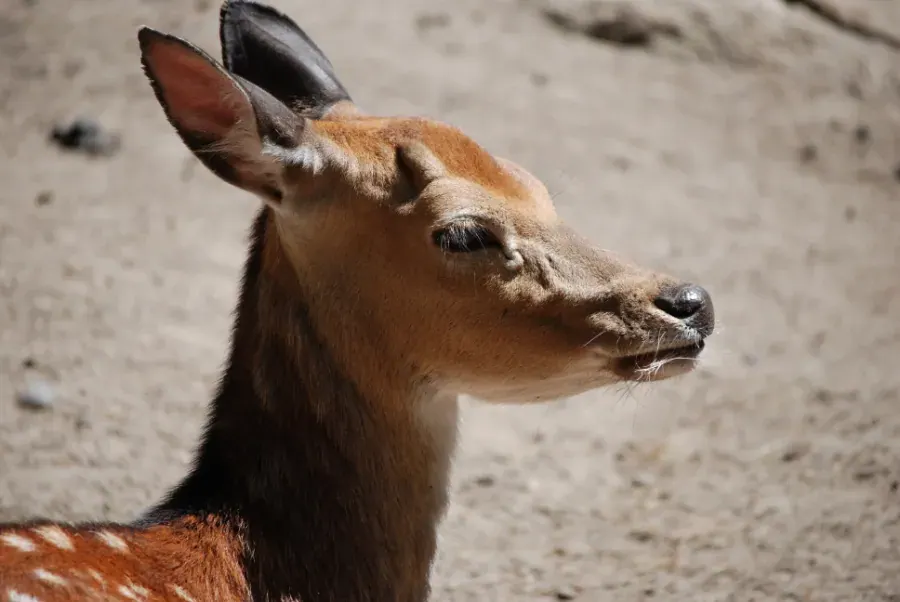
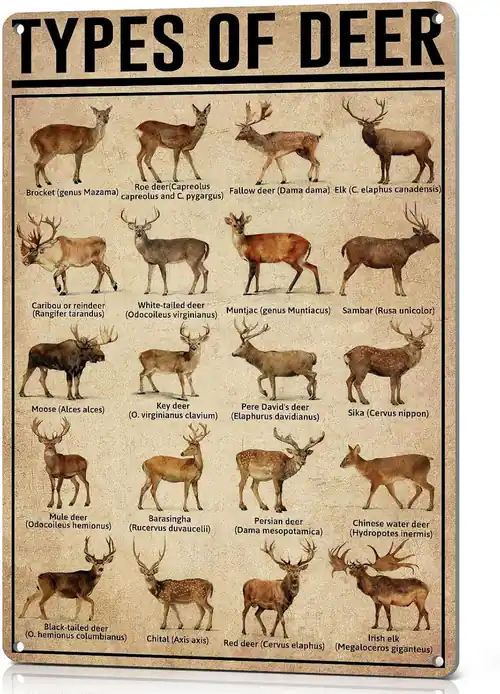
A sample of the family Cervidae and where each is found.
White-tailed deer
Odocoileus virginianus. Most of North and Central America. The most numerous and widely distributed deer species on the continent.
Mule deer
Odocoileus hemionus. Western North America. Named for its large, mule-like ears; bounds with a distinctive four-legged "stotting" gait rather than running.
Elk (wapiti)
Cervus canadensis. Western North America and parts of Asia. Among the largest deer species, known for the males’ loud bugling call during the autumn rut.
Moose
Alces alces. Boreal forest across North America, Europe and Russia. The largest living deer species, standing up to 7 feet at the shoulder.
Red deer
Cervus elaphus. Europe, parts of Asia and North Africa. Closely related to the North American elk and once considered the same species by some taxonomists.
Reindeer / caribou
Rangifer tarandus. Arctic and subarctic tundra. The only deer species in which females also commonly grow antlers.
Roe deer
Capreolus capreolus. Widespread across Europe. Small, solitary and territorial, unlike most deer species that favor herds.
Pudu
Pudu spp. Andean South America. The smallest deer in the world, standing little over a foot tall at the shoulder.