Seeing With Sound
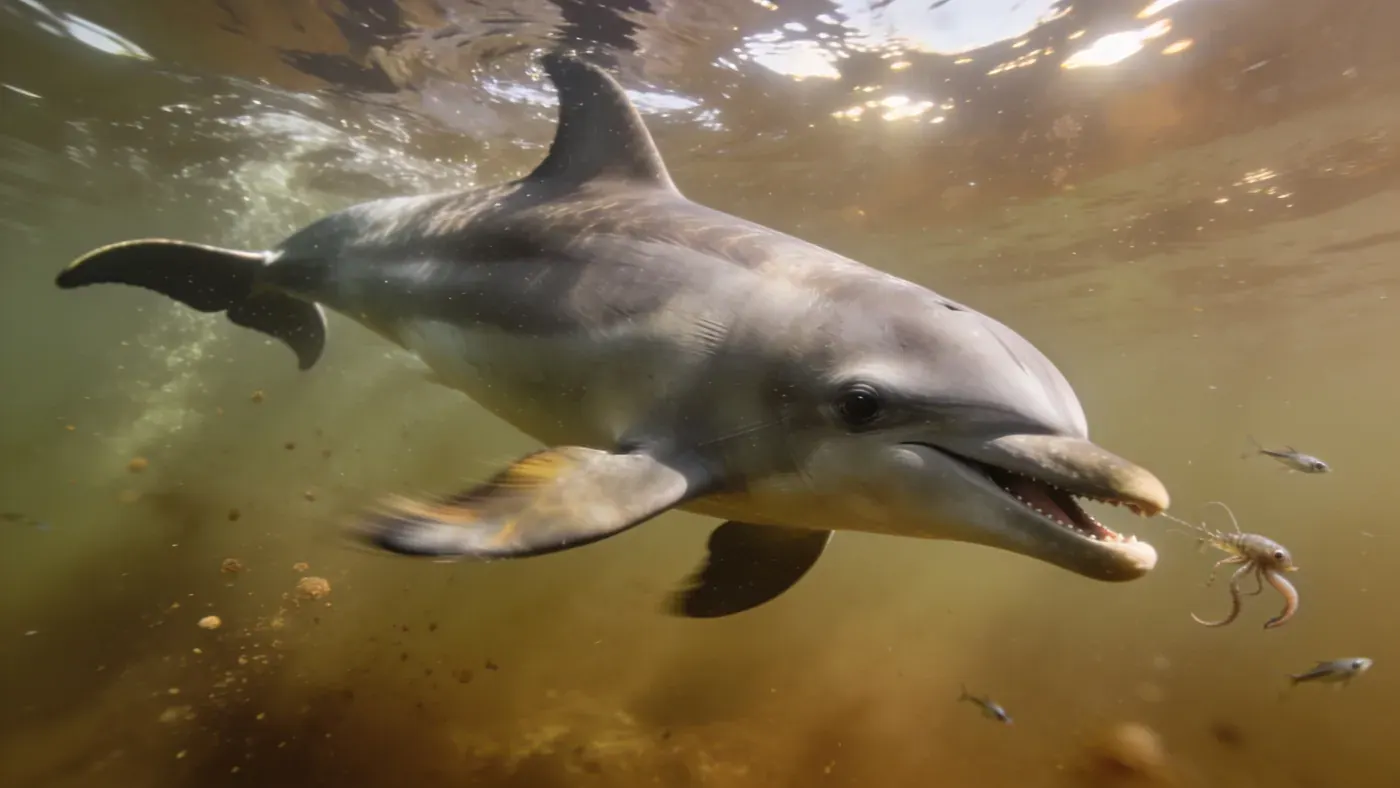
Dolphins produce rapid clicking sounds through an organ in their forehead called the melon, then interpret the returning echoes to build a detailed picture of their surroundings — even in dark or murky water.
Locating Prey by Echo
Echolocation lets dolphins detect the size, shape, speed and even internal structure of an object from its echo alone, helping them pinpoint fish hidden in sand or schooling in tight groups.
Clicks Faster Than the Eye Can Follow
Dolphins can produce hundreds of clicks per second, adjusting the rate and pitch depending on the distance to a target — clicking faster as they close in, similar to a bat's echolocation "buzz."
A Lower Jaw That Listens
Returning echoes are received through fat-filled channels in the dolphin's lower jaw, which conduct sound to the inner ear far more effectively than the small external ear openings on the sides of its head.
Studied for Sonar Technology
Dolphin echolocation is so precise that researchers and engineers have studied it to help refine sonar and underwater detection systems used in navigation and marine research.