A Browser More Than a Grazer
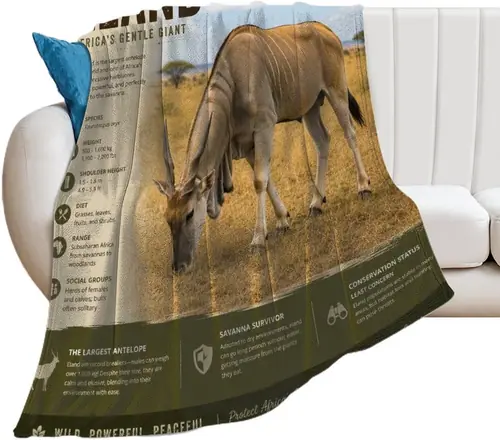
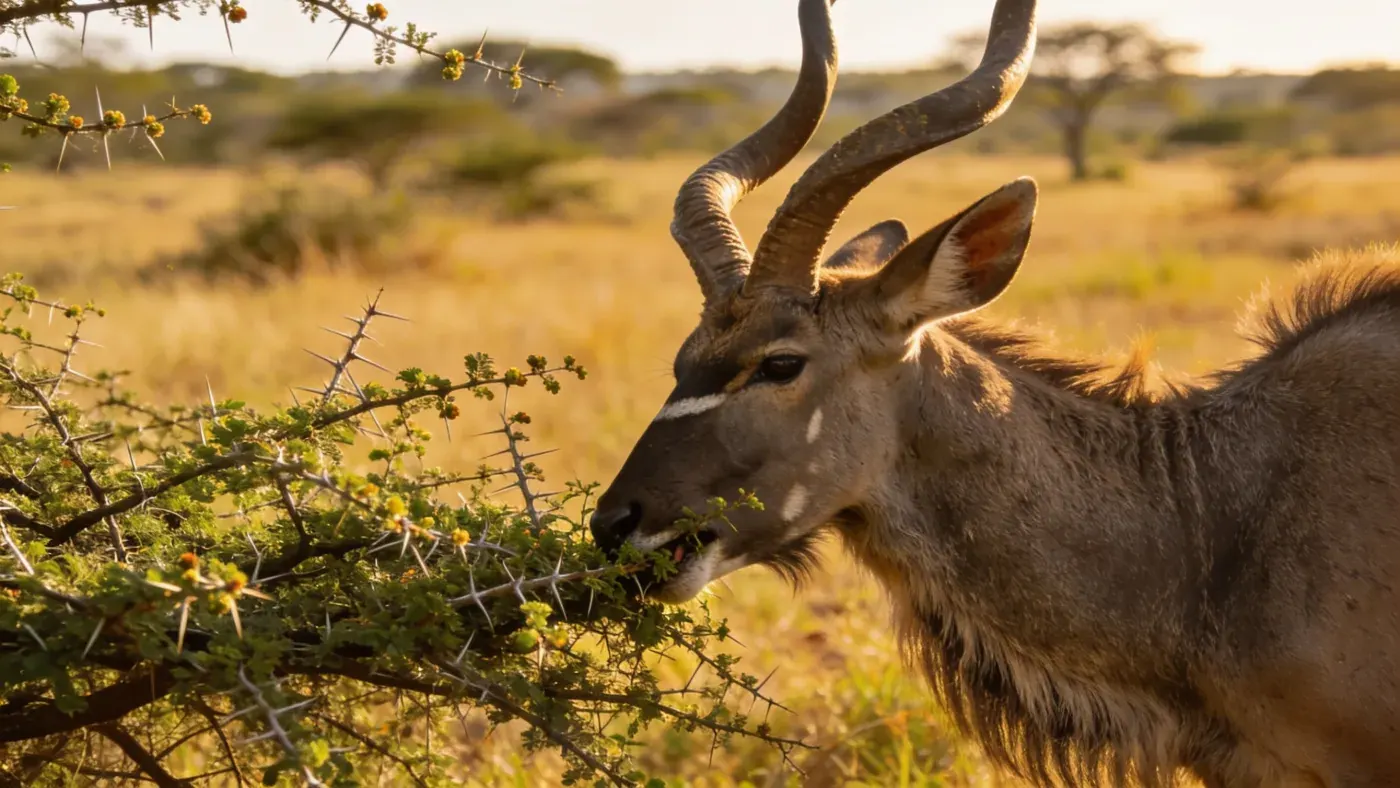
Unlike many African antelope that rely mainly on grass, the eland is primarily a browser, feeding on leaves, shoots, fruit, and seed pods from trees and shrubs including acacia. This diet allows the eland to thrive in drier, more marginal habitats where suitable grazing may be scarce for much of the year.
Going Weeks Without Drinking Water
The eland can survive for extended periods, sometimes weeks, without drinking water directly, obtaining most of its moisture from the plants it eats. This remarkable water efficiency allows eland to range into semi-arid regions that many other large antelope cannot inhabit.
Cooling Without Sweating Excessively
To conserve water, eland can allow their body temperature to rise several degrees above normal during the hottest parts of the day rather than sweating to cool down, a strategy called adaptive heterothermy. Body heat is then released more efficiently once temperatures drop at night.
Digging for Roots and Tubers in Dry Seasons
During dry seasons when leaves and fruit are scarce, eland will use their hooves to dig up roots, bulbs, and tubers buried underground, providing both nutrition and additional moisture. This flexible foraging strategy is part of what makes the eland one of the most drought-resilient large antelope species in Africa.