A Smaller, Different Elephant
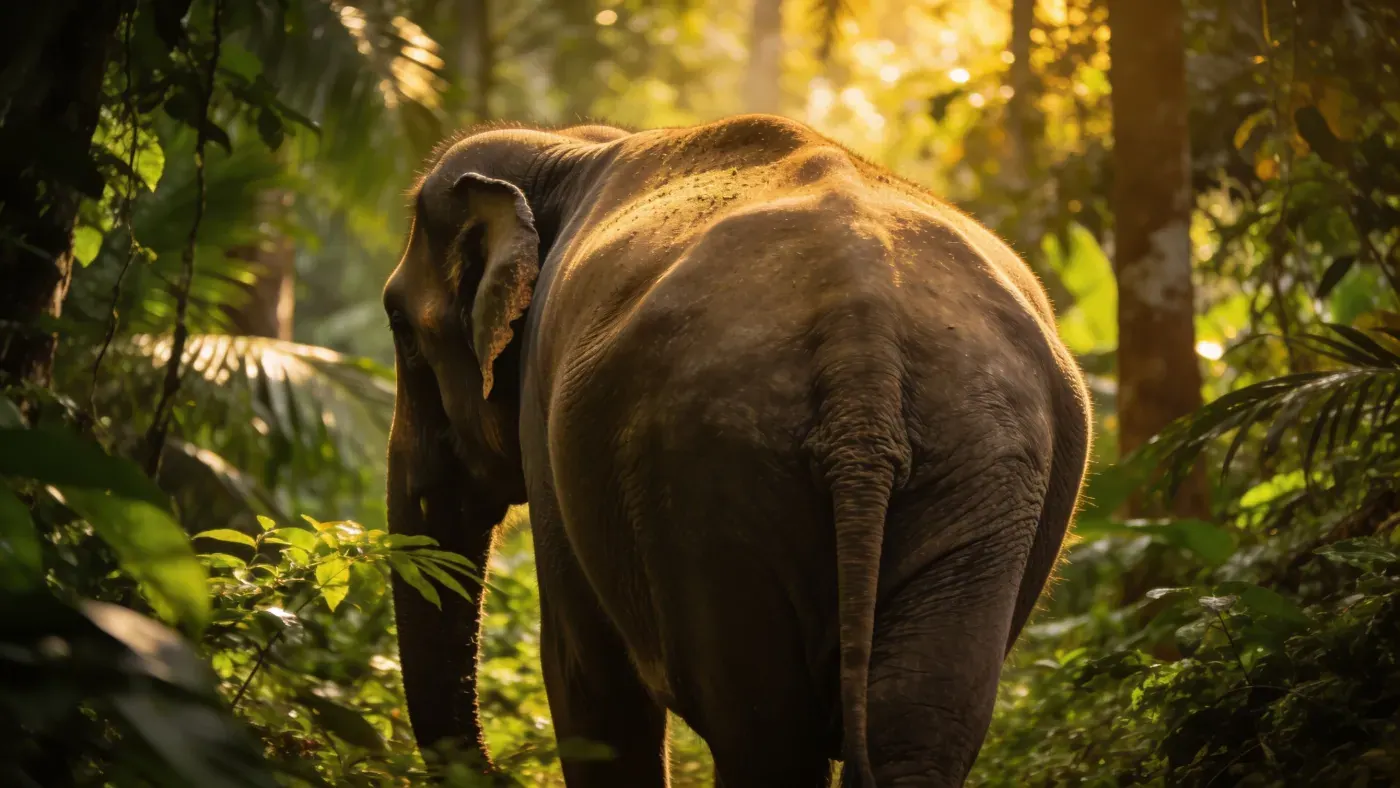
The Asian elephant, Elephas maximus, is the only surviving elephant species outside Africa and is noticeably smaller than its African relative. Adult males stand around 10 feet at the shoulder and weigh roughly 11,000 pounds. Beyond size, the differences are easy to spot: Asian elephants have much smaller, rounded ears, a convex or level back rather than the African elephant's concave one, a single finger-like lip at the tip of the trunk instead of two, and noticeably more body hair.
Tusks
Only male Asian elephants grow prominent tusks; females have either none or very small ones known as tushes, which rarely extend past the lip. This is a significant contrast with African elephants, in which both sexes carry tusks.
Range
Asian elephants survive across fragmented pockets of India, Nepal, Bhutan, Sri Lanka, Bangladesh, Myanmar, Thailand, Cambodia, Laos, Vietnam, Malaysia, Indonesia, and southern China. The wild population is estimated at only 35,000 to 40,000 individuals — a fraction of the African elephant population — and is classified as endangered.
Habitat and Diet
Asian elephants favour forest and the transitional grassland at its edges, from tropical rainforest to dry deciduous woodland. Like all elephants they are herbivores, feeding on grasses, bark, roots, leaves, and cultivated crops where wild forage has been displaced, and they spend the majority of each day feeding.
Living Alongside People
Asian elephants have been kept and worked alongside humans for thousands of years, in forestry, ceremony, and transport, and they hold deep cultural and religious significance across much of their range. That same proximity is now their greatest threat: as farmland expands into forest, crop raiding and human-elephant conflict have become the leading cause of elephant deaths across parts of Asia, alongside habitat fragmentation and poaching of tusked males.