Two Primary Kinds
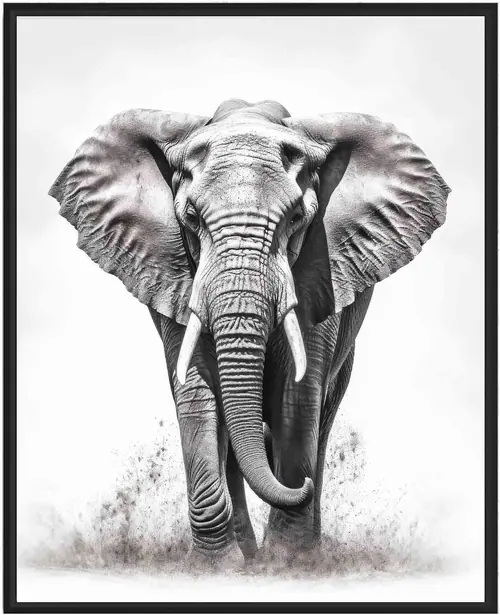
Elephants are the largest of all land mammals, and the two primary kinds — Asian elephants and African elephants — are both among the largest land animals on Earth, though Asian elephants run notably smaller. A male African elephant reaches 10 to 13 feet in height and roughly 15,000 pounds, while a male Asian elephant tops out around 10 feet and 11,000 pounds.
A Grazing, Browsing Diet
Elephants are herbivorous, feeding on grass, leaves, fruit, and bark, and they spend an average of 16 hours a day eating to sustain their enormous size.
The Trunk
An elephant's trunk contains roughly 100,000 individual muscles, giving it extraordinary flexibility for drinking, trumpeting, breathing, grasping, showing affection, fighting, and smelling. Elephants sometimes use their tusks to fell trees and uproot shrubs, and their sense of smell is highly developed. They communicate over distances of 5 to 6 miles using low-frequency calls inaudible to humans.
Tusks and Ears
The upper incisors form long ivory tusks — present in all African elephants but only in male Asian elephants — and since tusks grow throughout an elephant's life, their length is a rough indicator of age. African elephants also have noticeably larger ears than their Asian counterparts, which they use to signal anger, warn of danger, and, by fanning, regulate body temperature; elephant eyesight, by contrast, is relatively poor.
Social Structure and Reproduction
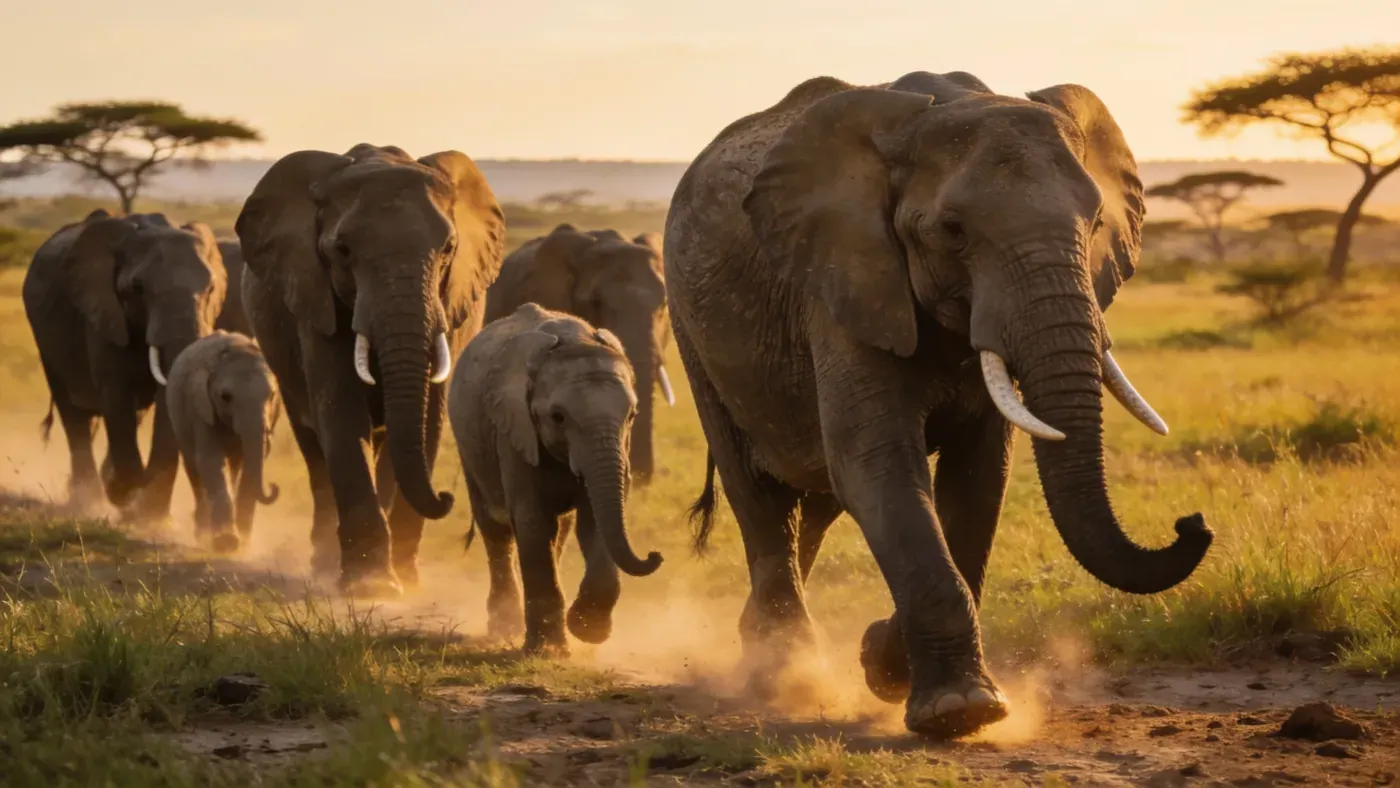
Adult males are bulls, adult females are cows, and their young are calves. Elephants live in small family herds usually led by the most senior female. Males are expelled from the herd between 12 and 15 years of age; females reach sexual maturity around 11 and typically remain with the herd, though young males, despite being sexually mature, don't actually mate until their mid-twenties. A single calf is born after a 22-month gestation, weighing around 200 pounds at birth, and orphaned calves are commonly adopted by other females in the herd.
Under Pressure
Elephant populations across Africa have been depleted by overhunting and the spread of the desert, and while elephants can adapt to nearly any habitat, poaching has made survival increasingly difficult. In the wild, elephants typically live 60 to 70 years.