The Matriarch
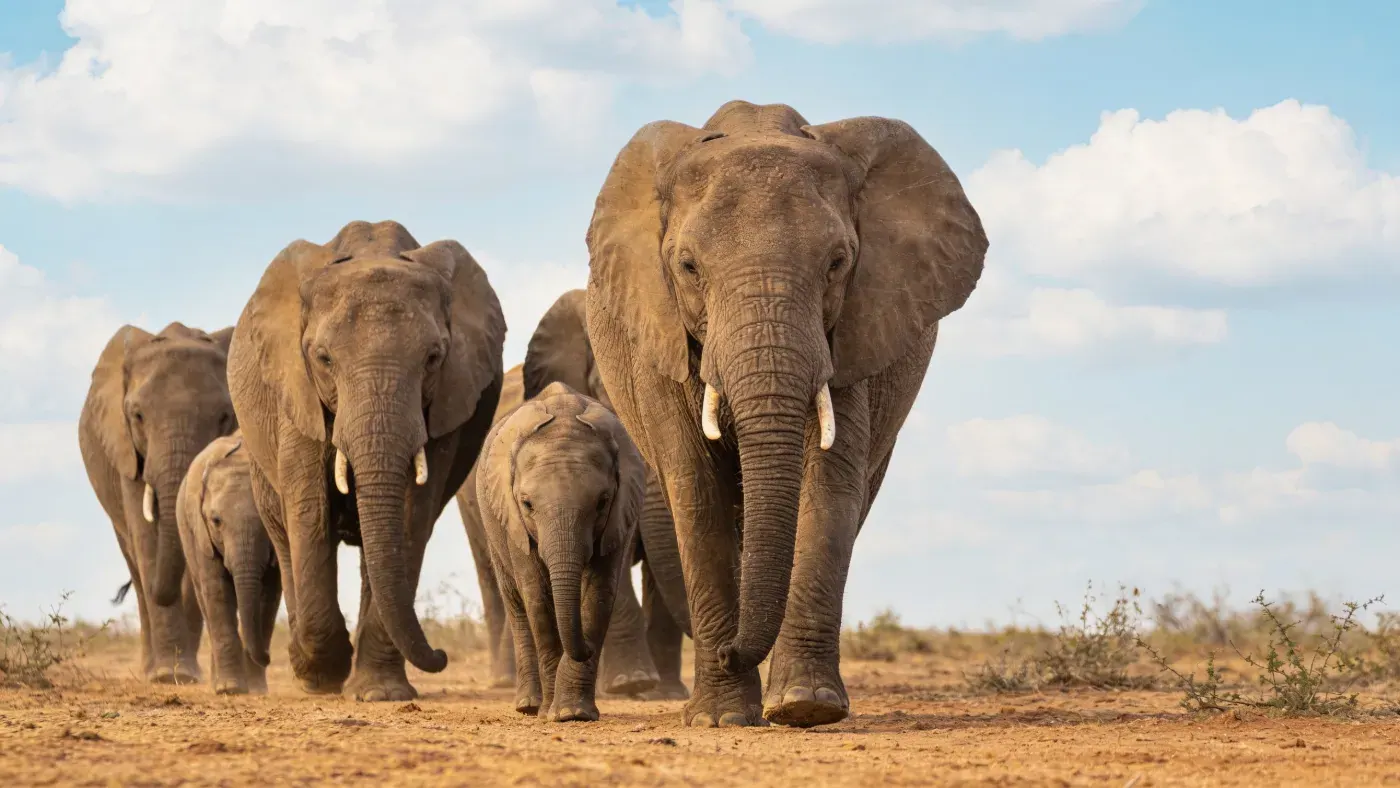
An elephant family is built around a matriarch — usually the oldest and most experienced female in the group. She decides when the herd moves, where it feeds, and which route to take to water, drawing on decades of accumulated knowledge of the landscape. In drought years, that memory is the single most valuable asset a herd has, and families led by older matriarchs consistently fare better than those that have lost them.
Who Belongs to a Herd
A typical family unit consists of related adult females — sisters, daughters, cousins — together with their calves, usually numbering somewhere between eight and a hundred individuals depending on conditions and food availability. Every adult female in the group participates in raising the young, and orphaned calves are routinely adopted by other females rather than abandoned.
When Males Leave
Male elephants grow up inside the family group but are pushed out between roughly 12 and 15 years of age. From that point they live alone or drift in loose bachelor associations with other males, rejoining a family group only briefly when a female is ready to mate. Older bulls play an important role in this arrangement, moderating the behaviour of younger males much as a matriarch guides her herd.
Bond Groups and Clans
Family units are not isolated. Related families that share a common ancestry form what researchers call bond groups, greeting one another with elaborate trumpeting and trunk-touching displays when they meet, and several bond groups may in turn belong to a broader clan sharing the same dry-season range. This layered structure means an elephant can recognise and maintain relationships with dozens of individuals over a lifetime.
Grief and Memory
Elephant families are among the very few animal groups observed to respond to death with what looks unmistakably like mourning — standing with a dead herd member for extended periods, touching the body repeatedly with their trunks, and returning to the remains long afterwards. The same behaviour has been recorded toward unrelated elephant remains, which is part of why elephant social intelligence is studied so intently.