Family Groups, Much Like Us
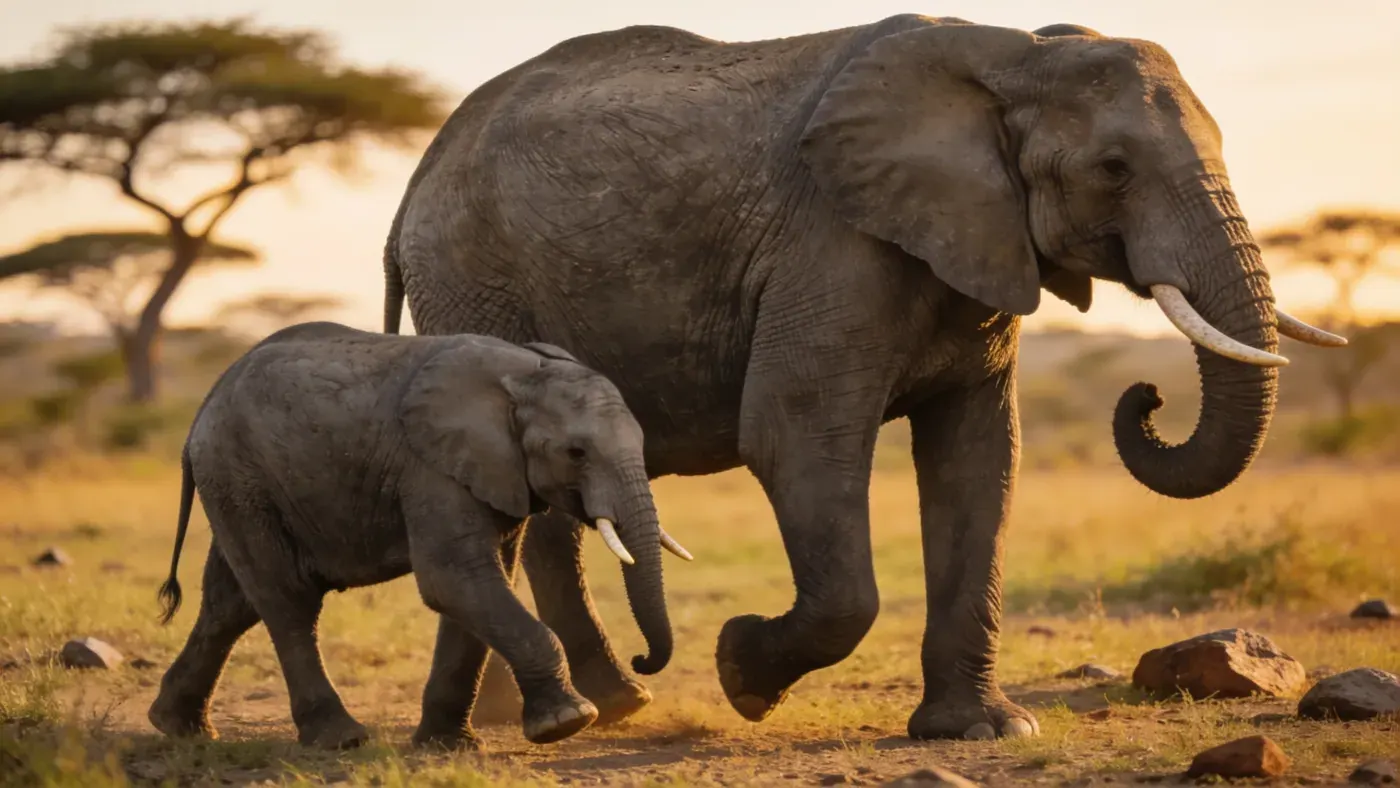
An elephant's life cycle bears some surprising similarities to a human one. Elephants live in small, matriarch-led family groups, and when food is abundant enough for groups to merge, males tend to associate with other males and females with other females — not unlike the way people naturally sort into social circles.
Musth and Mating
Males periodically enter a state called musth, marked by the release of a thicker fluid than usual, and this is generally the period during which reproduction occurs, whether in the wild or in managed care.
The Longest Pregnancy of Any Mammal
Once mating occurs, a female elephant carries her calf for 18 to 22 months — the longest gestation period of any mammal on Earth. The calf is born weighing over 200 pounds and nurses for an extended period, often weaned only once the mother can no longer tolerate the pokes from its developing tusks.
A Long Reproductive Life
Female elephants can continue having calves until roughly age 50, though they cannot conceive again until at least two and a half to four years after a previous birth.
Aging Much Like We Do
As elephants age they develop some of the same conditions common in aging humans, including arthritis and cardiovascular ailments — though this rarely shortens their natural lifespan of 70 years or more. Where lives are cut short, illegal poaching, not age-related disease, is usually the cause.