An Animal With No Natural Enemies
The elephant, the largest land animal alive, has no natural predators as an adult. Elephants live in family herds of up to twenty adult females and their young, led by the oldest female, the matriarch — with the exception of adult males, solitary nomads who join a family group only when a mature female is ready to mate.
A Modified Nose and Lip
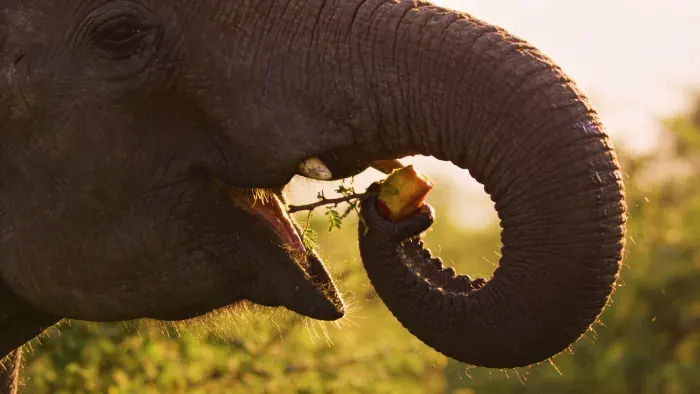
The trunk — a modified nose and upper lip lined with more than forty individual muscles — bends and grips with the versatility of an arm or a hand, sensitive enough to pick up a single blade of grass. An African elephant's trunk ends in two finger-like lips; an Asian elephant's has only one.
Sucking and Feeding
The trunk can suck up to fourteen liters of water at once, either drinking it or spraying it over the body to cool down, and can suck in dust to spray over the skin and reduce the parasite load. It is equally indispensable for feeding — breaking branches, stripping leaves and grass, and plucking fruit.
Smell, Defense, and Communication
As a sense organ, the trunk functions almost like a second nose and a hand combined: raised and swayed side to side, it locates friends, danger, and food like a periscope, and sweeps the ground like a metal detector to follow a scent trail. It also serves defensively, grasping and flinging a threat, and plays a central role in social bonding — play, courtship, and the mother-calf relationship all involve the trunk. Vocal communication, from low infrasonic rumbles to audible trumpets, is produced through the trunk much like a wind instrument.