A Wetland Specialist Across South and Southeast Asia
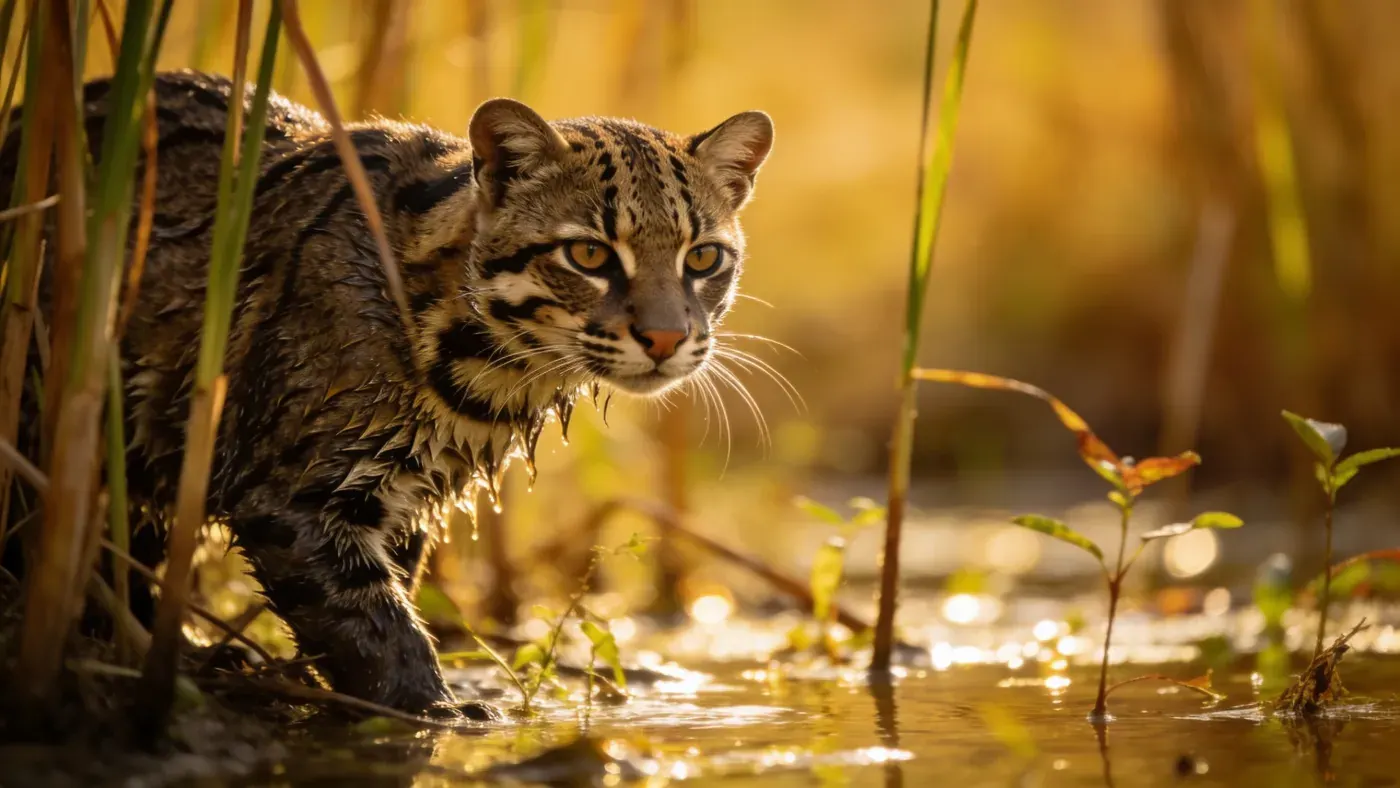
The fishing cat is found in patches across South and Southeast Asia, including India, Sri Lanka, Bangladesh, Myanmar, Thailand, Cambodia, Vietnam, and the Indonesian island of Java. Unlike most wild cats, which favor forest or open terrain, the fishing cat is almost entirely tied to wetland habitats.
Marshes, Mangroves, and Riverbanks
Fishing cats inhabit dense vegetation along marshes, swamps, mangrove forests, and the reed beds bordering rivers, lakes, and oceanfront estuaries. They rarely stray far from water, since aquatic and near-water prey make up the bulk of their diet, unlike other small wild cats that hunt primarily on land.
A Range Shrinking With Wetland Loss
The fishing cat's range has fragmented significantly as wetlands across Asia are drained for agriculture, aquaculture, and urban development. Populations in some countries, including parts of Southeast Asia, have become so sparse and disconnected that local extinction is a real risk in areas where wetlands have disappeared entirely.
Isolated Populations With Little Contact
Because the fishing cat depends so heavily on connected wetland corridors, populations in different countries and even different river systems are often genetically isolated from one another, a pattern that conservationists say makes coordinated, wetland-specific protection especially important for the species' survival.