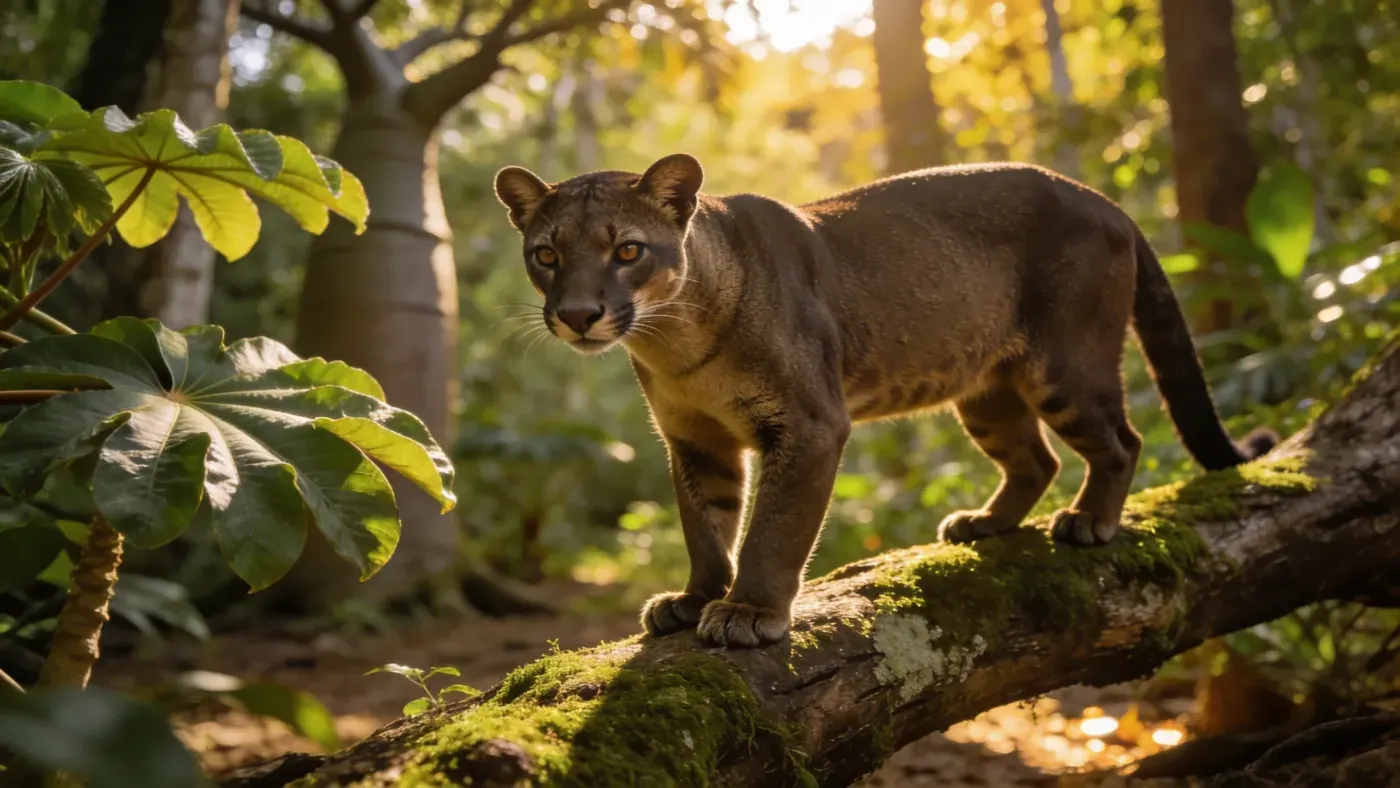
Listed as Vulnerable
The fossa is classified as Vulnerable by the IUCN, with a total wild population estimated at only a few thousand individuals spread across Madagascar's remaining forests. Because the fossa exists nowhere else on Earth, its long-term survival is tied entirely to what happens to Madagascar's forest habitat.
Habitat Loss Is the Primary Threat
Madagascar has lost the majority of its original forest cover to logging, agriculture, and slash-and-burn farming, fragmenting the fossa's habitat into smaller, disconnected patches. As a wide-ranging predator that needs large, continuous territory, the fossa is particularly vulnerable to this kind of habitat fragmentation.
Conflict With Livestock Farmers
Fossas occasionally prey on domestic poultry, leading some farmers to trap or kill them in retaliation. This human-wildlife conflict adds additional pressure on top of habitat loss, especially in areas where fossa territory overlaps with expanding farmland at the edges of protected forest.
Protected Areas Offer the Best Hope
The fossa's strongest remaining populations are found within Madagascar's network of national parks and protected reserves, including Ranomafana and Masoala National Parks. Continued protection and expansion of these forest reserves is considered essential to preventing further decline of the species.