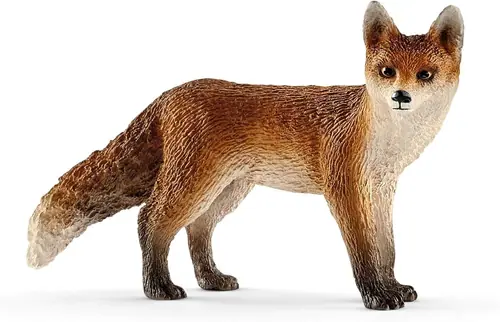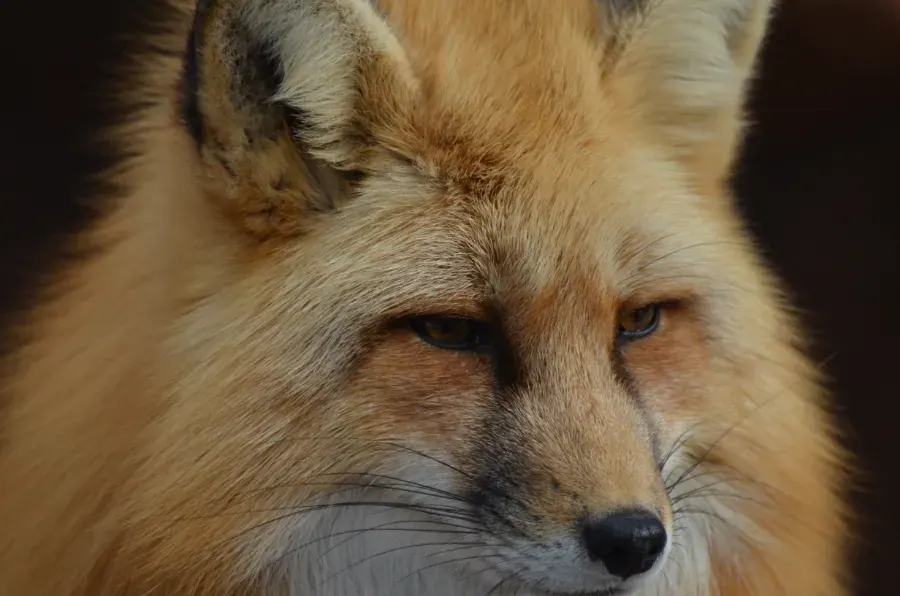
The Most Widespread Wild Carnivore
The red fox has the widest natural geographic distribution of any wild carnivore on Earth, occurring across nearly the entire Northern Hemisphere from the Arctic Circle to North Africa, and introduced to Australia in the nineteenth century, where it has since become an invasive species affecting native wildlife.
Cat-Like Eyes on a Dog-Like Body
Alone among most canids, the red fox has vertical, slit-shaped pupils rather than round ones — an adaptation shared with cats that improves depth perception in low light, suited to a hunting style built around precise timing rather than a chase.
Color Variants
Beyond the familiar orange-red coat, red foxes naturally occur in several other color forms, including the "silver fox" (mostly black with silver-tipped guard hairs) and the "cross fox" (reddish with a dark cross pattern across the shoulders) — all the same species, not separate breeds.
A Genuine Omnivore
Unlike wolves, which rely heavily on large hoofed prey, red foxes eat an extraordinarily varied diet — rodents, rabbits, birds, insects, earthworms, fruit and berries in season, and, near people, whatever food waste is available. This dietary flexibility is a major reason for the species’ enormous range.
A Vocal Repertoire
Red foxes produce roughly 40 distinct calls, the most startling of which is a piercing scream used mostly by females during the winter breeding season — a sound frequently mistaken by people unfamiliar with it for a person or animal in distress.