Skin Colored to Disappear
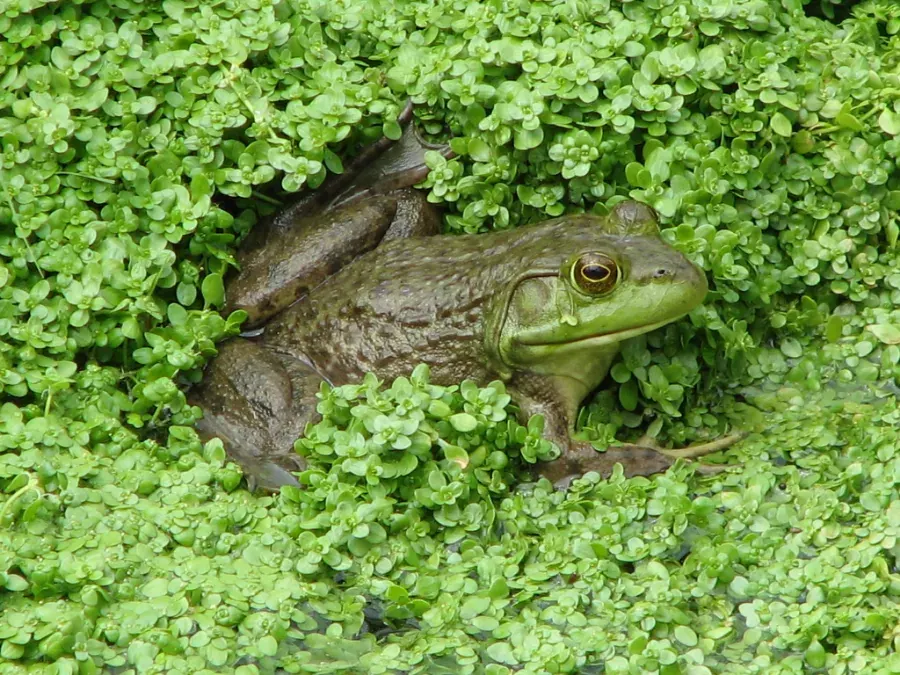
Most frog species rely on camouflage as their primary defense, with skin tones and patterns evolved to match tree bark, leaf litter, moss, or mud depending on their habitat. Some species can even shift their skin tone slightly over minutes or hours in response to temperature, light, or humidity changes.
Playing Dead and Sudden Startle Displays
Some frogs, when caught, will go completely limp and play dead, a behavior called thanatosis that can cause predators to lose interest. Others rely on a startle display, suddenly flashing brightly colored patches on their hind legs or underside — normally hidden — to briefly confuse or scare off a predator, buying time to escape.
Toxic Skin Secretions Beyond Poison Dart Frogs
While poison dart frogs are the most famous toxic amphibians, many other frog species secrete mild to moderately toxic compounds through their skin as a deterrent, making them unpleasant or harmful for predators to bite or swallow, even without the vivid warning colors of true dart frogs.
Explosive Jumps as a Last Resort
When camouflage fails, a frog's powerful hind legs allow for a sudden, unpredictable jump many times its own body length, often in a random direction that's difficult for a predator to anticipate or follow. This burst of speed is frequently enough to escape a strike that has already begun.