Life on Sheer Terrain
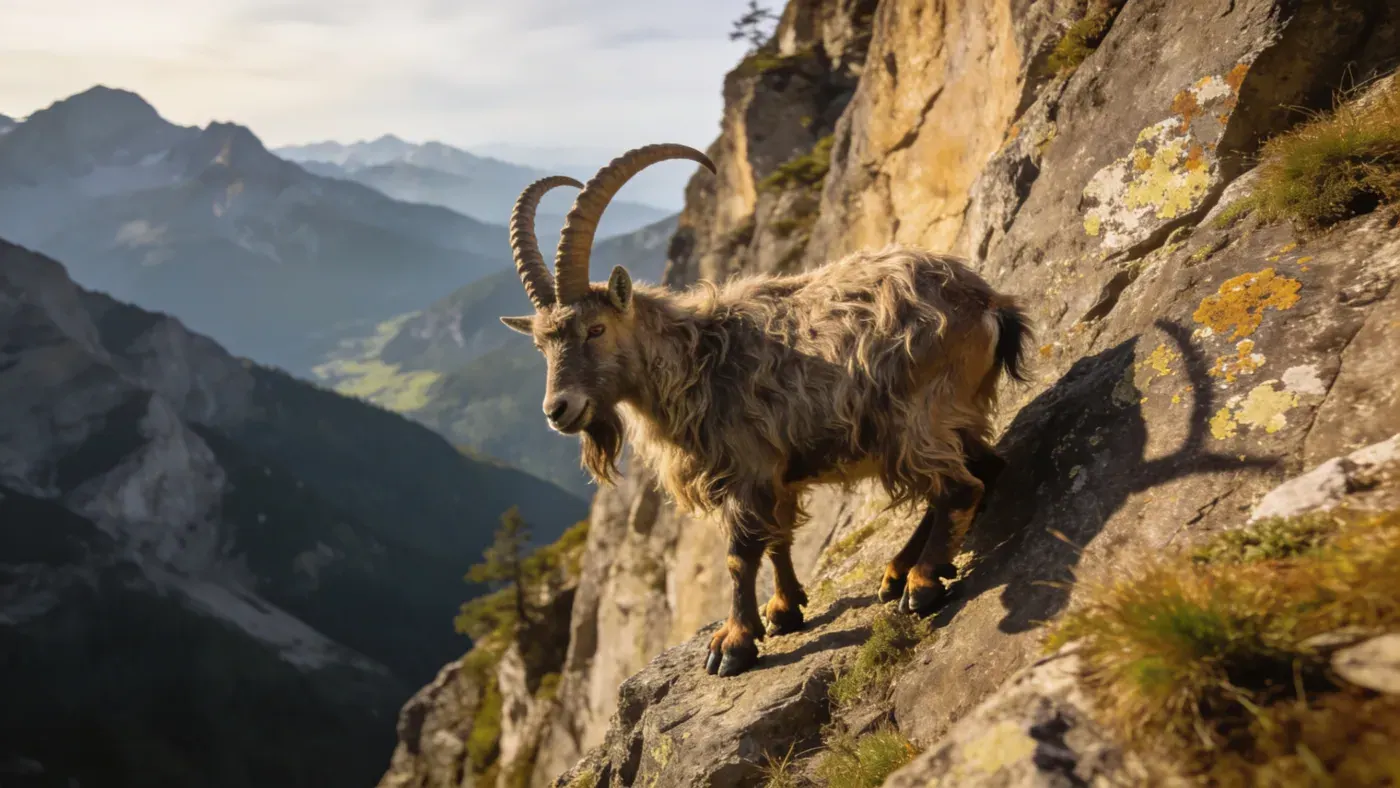
Wild goats, including the bezoar ibex, Alpine ibex, and markhor, inhabit some of the steepest, rockiest terrain on Earth, from the mountains of the Middle East and Central Asia to the European Alps. This preference for cliffs and crags helps them avoid most predators, which struggle to follow onto such precarious footing.
Hooves Built for Grip
Wild goats have specialized hooves with a hard outer rim and a soft, rubbery inner pad that conforms to uneven rock surfaces, providing exceptional grip on cliffs and ledges only inches wide. This adaptation allows them to navigate terrain that would be impassable for most other large mammals.
Seasonal Movement Between Elevations
Many wild goat populations migrate seasonally between higher elevations in summer, where forage is abundant and temperatures milder, and lower slopes in winter, where snow cover is less severe and food remains more accessible.
Pressure From Habitat Loss and Hunting
Several wild goat species face conservation pressure from habitat degradation, competition with livestock for grazing land, and illegal hunting for meat and trophies. Species like the markhor have benefited from community-based conservation programs that link local economic incentives to population recovery.