A High-Altitude Subspecies
The mountain gorilla, a subspecies of the eastern gorilla, lives only in two isolated populations in the Virunga Massif spanning Rwanda, Uganda and the Democratic Republic of Congo, and in Uganda’s Bwindi Impenetrable Forest — at elevations up to 13,000 feet, considerably higher and cooler than any other gorilla population.
A Thicker Coat for the Cold
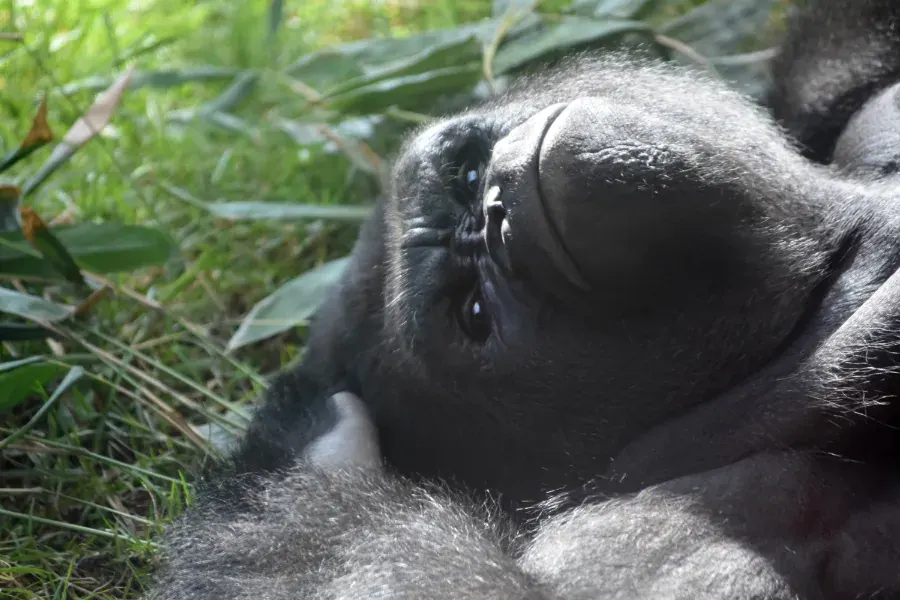
Mountain gorillas carry longer, thicker fur than their lowland relatives, an adaptation to the cold, misty conditions of their high-altitude bamboo and montane forest habitat, where nighttime temperatures can drop well below what lowland gorillas ever experience.
One of Conservation’s Real Success Stories
Mountain gorillas were reduced to barely 250 individuals by the 1980s, driven by poaching, habitat loss and regional conflict, and were widely expected to be among the first great apes to go extinct in the wild. Sustained protection, anti-poaching patrols and carefully managed tourism have instead more than quadrupled the population to over 1,000 today — the only great ape subspecies currently increasing in number.
Gorilla Trekking Tourism
Regulated tourism, in which small groups of visitors pay substantial permit fees to spend a strictly limited hour observing a habituated troop, has become the financial backbone of mountain gorilla protection, funding rangers and providing local communities a direct economic stake in the species’ survival rather than in poaching or land conversion.
Ongoing Threats
Despite the recovery, mountain gorillas remain critically endangered. Habitat is confined to a small, densely surrounded area with no room for further population expansion, and the region’s history of civil conflict has at times disrupted patrols and protection efforts, most seriously in the DRC portion of the Virunga range.